 [1]
[1]
By John Helmer, Moscow
@bears_with [2]
During the Americanization of Russian popular culture in the 1990s, the meaning of the word класс (pronounced kl-ah-ss) was dismantled – reformed was the political term in fashion then.
The word had come into the Russian language when Tsar Peter the Great (1682-1725) borrowed it from the German, French, and Latin words whose meaning originally referred to ranks in the army, citizenry, and government bureaucracy; school classes; categories in biology, botany, and other scientific classifications.
By the time Vladimir Putin replaced Boris Yeltsin in 2000, young Russians were saying класс! to mean “Oh boy!”, “wow!”, “cool!”, “awesome!”. A one-syllable hiss of approval, nothing more.
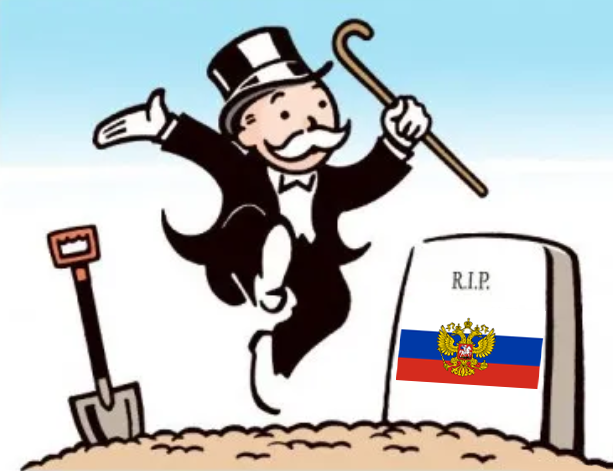
Last week, Putin reintroduced [3] класс with a different exclamation point. “We hope”, he told a Japanese questioner, “that, on the part of the Japanese ruling class, the Japanese political establishment and Japan as a whole, the same disposition towards mutual, joint work in the interests of both countries will one day prevail.”
In the European states, he said he was seeing the conflict between classes at home turn into war with Russia outside. “Faced with adverse economic trends at home, an increasingly precarious position for their ruling political classes, and changing public sentiment, they now seem to be provoking confrontation with Russia and fuelling further crises between Russia and Europe. They are doing so precisely in order to justify preparations for war and to rally as many supporters as possible around themselves, thereby enabling them to remain in power. The logic is very simple. I am convinced that this explains a significant part of the reasoning behind the European countries’ conduct toward the Russian Federation.”
In the US, Putin said he thinks the ruling class acts differently from the ruling classes of Europe.
“The ruling class of the United States has an understanding of how to build relations. Yes, there is influence probably, probably there — always was. But ultimately, the US is driven by its national interests, especially with President Trump. This, by the way, also applies to the relations between the United States and Europe. Look, for example to put it mildly, in order not to offend anyone, pragmatic decisions are made by the United States in the sphere of economic interaction with Europe, yes? We see it, we understand, you know what I’m talking about. Therefore, yes, there is influence, but above all the US is guided by its interests.”
“Before that, under President Biden, I think that there, by contrast, the government of the United States had a greater influence on Europe’s position on Russia, but then the dynamics of the events that are taking place began to develop according to its laws. Now, of course, the main, leading European countries take a much more aggressive stance against Russia than the United States. If the US seeks to end the conflict, it seems that many countries in Europe, as I have said today, based on the unfavourable development of the economies in their countries, respectively, the provisions of the ruling political class at the moment, based on changes in sentiment within their countries, now they are, perhaps the instigators of aggressive behaviour against Russia and the creation of additional crises between Russia and Europe to justify the need to prepare for war and mobilize around itself as many supporters as possible, to stay in power.”
War to destroy Russia to save the ruling classes of Europe! Despite the best efforts of the American ruling class to stop it! Класс! Oh boy! Awesome!
In this new, extra-long podcast with Rasheed Muhammad, broadcast on Saturday afternoon Chicago time, we discuss the mistakes that are being made here. Click to view or listen: https://www.youtube.com/live/NfkmyFNcf18 [4]