 [1]
[1]
By John Helmer, Moscow
@bears_with [2]
The best way of learning how the men inside the Kremlin think is in the history of the Byzantine Empire which began in the 4th century AD and whose last day, the anniversary of the empire’s last day, we celebrate this week – May 29, 1453.
The Kremlin men, fresh from their trip to the Forbidden City in Bejing, don’t think the American Empire will last for a comparable thousand years. They also don’t believe, like the Chinese, that the American Empire is close to an end which Russians and Chinese should be preparing to celebrate.
In their manuals of tactics and strategy and in the annals of their negotiations, treaties, and wars, the Byzantines, like the Kremlin men, tell themselves that the best way of deterring an enemy’s army from testing the red lines they say they will defend is, first of all, to announce their red lines; and then to bribe the enemy from crossing them. Only if the bribes are paid, the red lines crossed by force, and the bribetakers have reneged, is war inescapable.
At that point, the Byzantines long accepted, the force to be applied to those enemies who have violated the commitments they took bribes to accept must be ruthless, comprehensive, total.
“Do nothing unless you really have to,” advised the Byzantine treatise on strategy, De Re Strategica [3], composed in the 10th century AD, “but watch the enemy’s moves carefully, so that you can strike effectively if action is unavoidable.”
Bribery was a strategic method for achieving political objectives by postponing war. It was more predictable in outcome and cost less to carry out. But the Byzantine emperors and their advisers and commanders also understood that bribery is temporary because it’s always personal, psychological. One way they employed it to extend its effectiveness was to lull the bribe receivers into false confidence in their power, kill them, and replace them with newcomers whose lack of confidence increased their dependence on fresh bribes and thus delayed their readiness to go to war [4].
Buying time with a combination of bribes and regime decapitation has been the strategy of President Donald Trump and Prime Minister Benjamin Netanyahu in their war against Iran in June of last year and since February 28 of this year. But this has been a failure; time is now running against them both.
They have also failed on one of the Byzantine strategist’s pieces of psychological advice – never hate your enemy so much that you don’t understand him, can’t anticipate him, or you end up underestimating his capacity to deceive you and succeed in his counterattack.
President Vladimir Putin doesn’t play chess like the Byzantines and he hasn’t studied their strategy history, especially the annals where they explain how and why they defeated the Russians. Putin and his associates have also failed to follow another of the Byzantine strategist’s pieces of psychology – never love your enemy, or want to be loved by him so much that you end up underestimating his capacity to deceive and counterattack.
In the Kremlin department of loving the Americans and wanting to be loved by them too much, the vizier in charge is Kirill Dimitriev [5], Putin’s special representative for arranging bribes to Trump, his sons, and friends.
“The sad reality”, concludes [4] a modern Greek historian of Byzantium, “that the emperors in Constantinople had to face was that the limited resources in money and manpower constituted the waging of war in more than one theatre an almost inconceivable prospect, especially since the maintaining of an active army posed a heavy burden”. Their solution [4] “was to praise the use of diplomacy, the paying of subsidies, and the employment of stratagems, craft, wiles, bribery and ‘other means’ to deceive the enemy and bring back the army with as few casualties as possible; a strategy of non-engagement that made perfect sense in military terms.”
A Jewish historian of Byzantium in his manual for the Israeli leadership has warned [6] that the “strategic advantage that was neither diplomatic nor military [is] instead psychological”. It’s a warning they haven’t comprehended. “Subversion is the best path to victory. It is so cheap compared to the costs and risk of battle that it must always be attempted, even with the most unpromising targets infused with hostility ior religious ardour…the Byzantines had certainly discovered that religious fanatics can also be bribed, and indeed often more easily – they are creative in inventing religious justifications for taking bribes…”
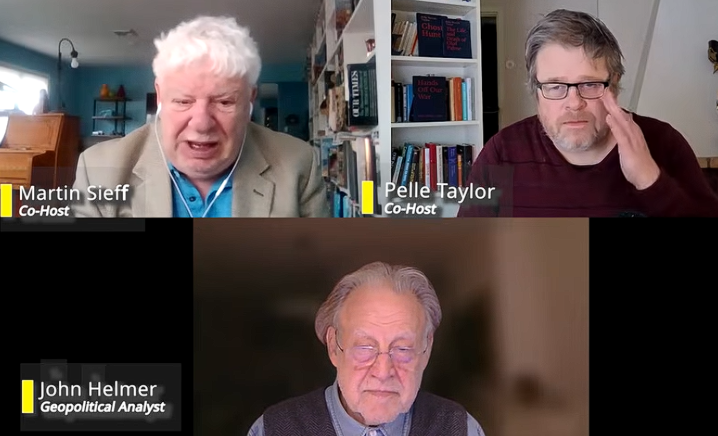
In the new Capitals Uncovered podcast with Pelle Neroth Taylor (Sweden) and Martin Sieff (US), we focus on how to interpret the Russian General Staff’s Oreshnik strikes on command bunkers in Kiev and Bela Tserkva, and what to expect next if, as the Russians believe, Trump has signalled a green light to the escalation of their military operations.
Click to view or listen to the podcast, recorded on Monday morning US time, afternoon Europe time: https://www.youtube.com/watch?v=JQqpb-ARgWs [7]
 [8]
[8]Source: https://www.youtube.com/watch?v=JQqpb-ARgWs [7]
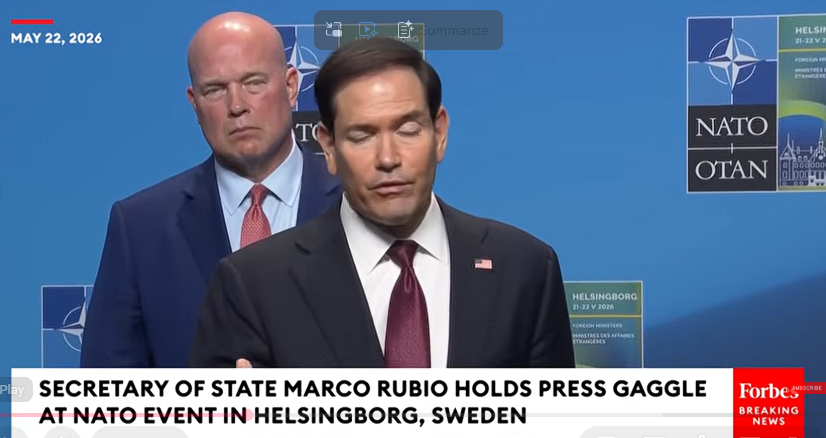
Here for reference is the full text of Secretary of State Marco Rubio green light signal, as the Kremlin has interpreted it, issued on May 22:
 [9]
[9]Source: https://www.state.gov/releases/office-of-the-spokesperson/2026/05/secretary-of-state-marco-rubio-remarks-to-press-10/ [10]
“QUESTION: Apart from the weather, what are you going to report back to President Trump from your impressions of the Helsingborg meeting? And also, have you got anything reassuring to say about the support for Ukraine that Sweden fear might be fading?
SECRETARY RUBIO: Well, I mean, Ukraine’s getting more support than they ever have through the PURL [Prioritized Ukraine Requirements List] program that the United States continues to be involved in. There’s been no changes made to that program. Look, my job here today was to come and set the stage for what will hopefully be a successful leaders’ meeting in Ankara in about six weeks. I think we all know what the situation here is. Number one is, like always – and this is not new. I mean, if you go back 30 years, there’s never been a time in which there hasn’t been a debate in American politics about what our presence and our contribution to NATO should be. And that is always driven by what is the value of NATO to the United States.
And I understand NATO’s valuable to Europe, and it should be. It also has to be valuable to the United States. So we always have to make that argument – in every administration, in every era – and that’s what we’re in the process of doing now is explaining this is the value of NATO to the United States. Related to that is what our force posture is within that Alliance, what our contributions are. ..
QUESTION: Have you made progress today, sir, with the Allies on getting the Strait of Hormuz fully back up and running, and have any —
SECRETARY RUBIO: No, that would be pretty ambitious to be able to open the straits at this meeting here today. But I can tell you that – what the hope there is. This is what I hope for – and this is a point I made – is we all would love to see an agreement with Iran in which the straits are open and they abandon their nuclear ambitions and so forth, their nuclear weapons ambitions. That’s what we would all hope for, and that’s what we’re going to continue to work on, and that’s what – work is ongoing, even as I speak to you now in that regard.
But we also have to have a plan B. And plan B is what if Iran refuses to open the straits? What if Iran decides we refuse to open the straits, we’re going to own the straits, and we’re going to charge tolls for it? Okay, at that point something has to be done about it. And I would argue that there are countries represented here today that are more deeply impacted by this then even the United States is. So all I’m saying and have said – and I think this has been reiterated by others; there are other countries that agree with me on this – is that we have to start thinking about what do we do if a few weeks from now Iran decides we don’t care, we’re going to keep the straits closed, we’re going to sink any ship that doesn’t listen to us or doesn’t pay us. Then someone is going to have to do something about it. Okay, they’re not just going to voluntarily reopen the straits in that scenario. So we have to start thinking about it…
QUESTION: Thank you. Have the peace negotiations under American leadership in Ukraine stalled, and do you think that the Europeans should take over?
SECRETARY RUBIO: Yeah, the peace negotiations on Ukraine under American leadership – let me just say we got involved – okay – because we were told we were the only ones that could do it. We were the only ones that the Russians and the Ukrainians would talk to, so we got involved. They were not fruitful, unfortunately. That’s the – we stand ready to continue to play that role. Despite leaks that are not true, despite stories out there about us forcing the Ukrainians to take this position or that position, which are not true, we – if we see an opportunity to pull together talks that are productive, not counterproductive, and that have the chance to be fruitful, we’re prepared to play that role. There are – there are no such talks occurring at this time, but we hope that will change because that war can only end with a negotiated settlement. It will not end with a military victory by one side or the other, at least from a traditional standpoint of how military victories are defined.
So it will have to – and if we can play a role in making that happen, the President is very much interested in doing it. We just, over the last few months, just sort of sensed that there wasn’t a lot of progress being made, but maybe dynamics will change. And if they do, we stand ready to play whatever constructive role we can play. If someone else would like to handle it, they should. But there doesn’t appear to be anybody else in the world right now that can handle it. So we’re more than happy to do that if the opportunity presents itself to have constructive and productive talks. We’re also not interested in getting involved in an endless cycle of meetings that lead to nothing [10].”
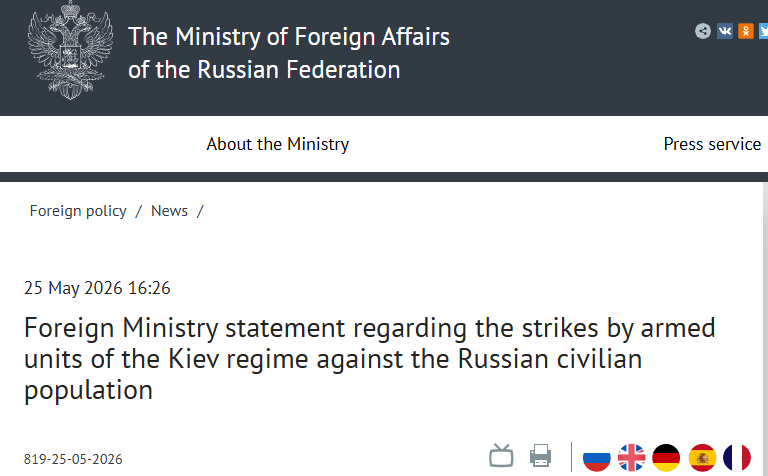
The Russian Foreign Ministry followed three days later, following the Starobelsk attack.
 [11]
[11]“All this has exhausted our patience. In this situation, the Armed Forces of the Russian Federation are beginning to launch consistent and systemic strikes at enterprises of the Ukrainian defence industry in Kiev, including specific facilities for designing, manufacturing and programming drones and preparing them for operation. The Kiev regime uses these drones with the assistance of NATO specialists who supply components, provide reconnaissance and target acquisition data. The strikes will target decision-making centres and command posts. Due to the fact that the above-mentioned facilities are scattered across Kiev, we are notifying foreign citizens, including the personnel of diplomatic missions and international organisations of the need to leave the city as soon as possible. We are urging residents of the Ukrainian capital not to approach facilities of the military and administrative infrastructure of the Zelensky regime [12].”
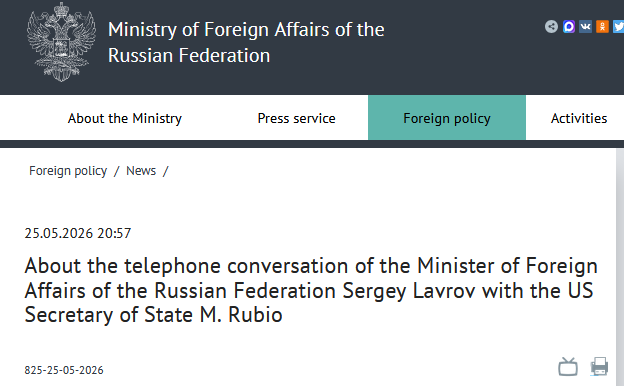
Four hours after this was published, the Foreign Ministry issued a communiqué on Foreign Minister Sergei Lavrov’s telephone call with Rubio that day. The timing of both the ministry statement and the communiqué came after the podcast was recorded.
 [13]
[13]“On behalf of the President of the Russian Federation Vladimir Putin, S.V. Lavrov officially brought to the American side information that in response to the ongoing terrorist attacks of the Kiev regime against the civilian population and civilian objects on the Russian territory, the Armed Forces of the Russian Federation begin systemic and consistent strikes on the facilities located in Kiev, used for the needs of the Armed Forces of Ukraine, and on the relevant decision-making centres. Sergei Lavrov drew attention to the statement of the Russian Foreign Ministry on May 25, in which the United States, along with other states which have offices in Kiev, is recommended to implement the evacuation of its diplomatic personnel and other citizens from the Ukrainian capital.”
“The Minister recalled the agreements reached at the highest level at the US proposal in Anchorage in August 2025 regarding the Ukrainian conflict and expressed regret that the brazen efforts of the European elites and the Kiev regime undermine these agreements that opened the way for a sustainable long-term settlement based on a balance of interests [14].”
In the Byzantine strategy manuals of almost two millennia ago, once war was forced and the Emperor had commenced, his orders to his commanders were to avoid battles of attrition and occupation of battlefield territory, and instead apply tactics of rapid manoeuvre to keep the enemy constantly off balance and demoralized – special military operations, not wars.
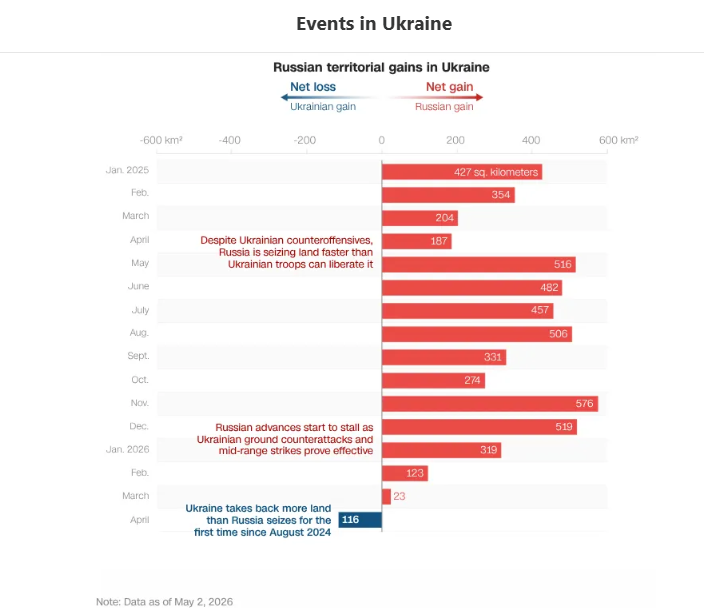
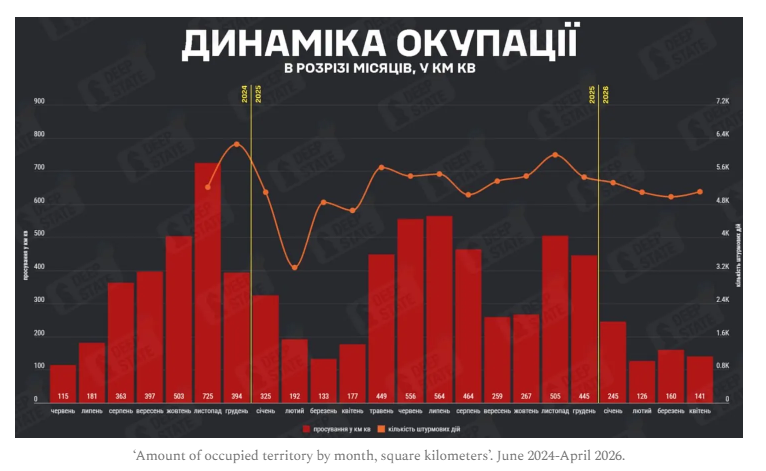
In most current accounts, this is now Ukrainian strategy; attrition is Russian strategy. For a detailed review of Russian and Ukrainian gains and losses, advances and retreats on the Novorossiya front, click to read this [15].
CONTRASTING CLAIMS OF TERRITORIAL GAINS, LOSSES – WASHINGTON, KIEV
 [16]
[16]Source: https://eventsinukraine.substack.com/p/rising-ukrainian-losses [15]For additional text: https://understandingwar.org/research/russia-ukraine/russian-offensive-campaign-assessment-may-25-2026/ [17]
 [18]
[18]Source: https://eventsinukraine.substack.com/p/rising-ukrainian-losses [15]
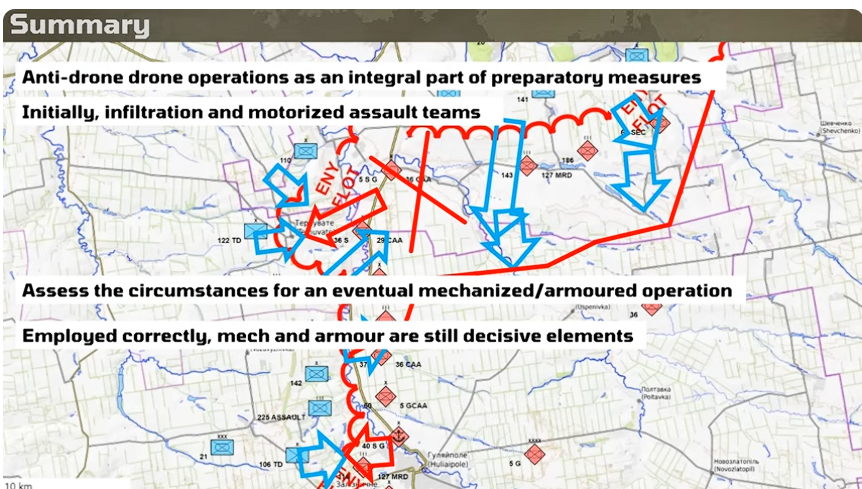
Mark Takacs, a serving Hungarian Army officer, has provided independent histories of tactics and operations along the front. The latest is a four-month history of operations in the Dniepropetrovsk sector, based on both Russian and Ukrainian sources; it was published on April 30, 2026:
 [19]
[19]Source: https://www.youtube.com/watch?v=tZFR9AvDsSI [20]