
By John Helmer, Moscow
@bears_with
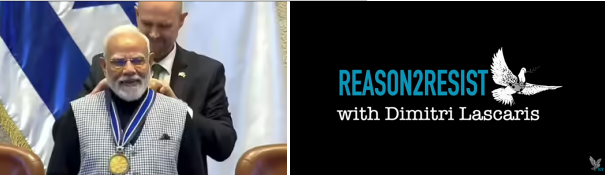
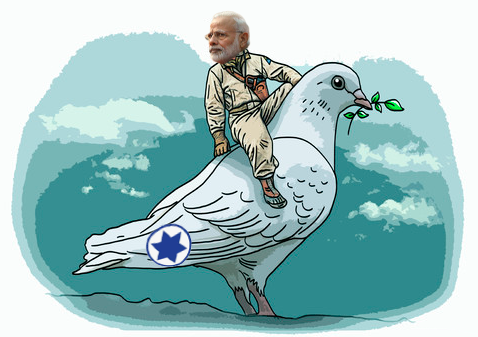
The loss of confidence between Russia and India has been growing rapidly since Prime Minister Narendra Modi declared his support for Israel three days before the Israeli-American attack on Iran began with the assassination of the Ayatollah Ali Khamenei.
To signal Russian hostility, Denis Anpilov, the Russian ambassador to India, went to the Iranian Embassy in New Delhi on March 5, signed the condolence book for Khamenei, and gave a statement to the Indian media, declaring “full solidarity with the people of Iran [and] the government of Iran.”
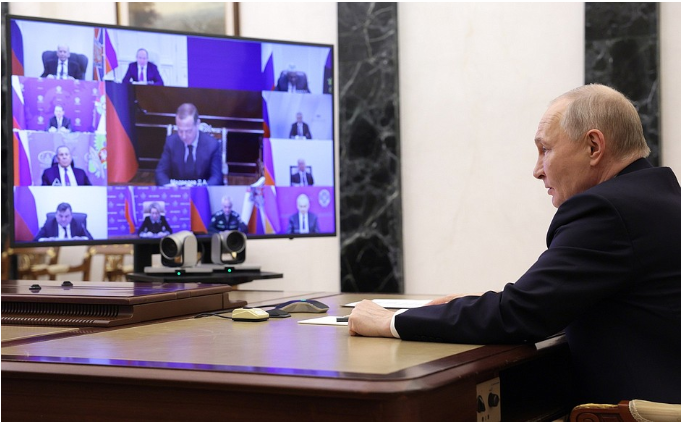
President Vladimir Putin had sent his condolences to Teheran on March 1. He reiterated them in a telephone conversation with Iranian President Masoud Pezeshkian on March 6.
Prime Minister Narendra Modi spoke first on March 1 with Israel’s prime minister. He then followed up with calls to the heads of state of the United Arab Emirates (UAE), Saudi Arabia, Bahrain, Jordan, Oman, Kuwait, and Qatar. Modi ignored Iran and Russia. He also hosted two leaders of the NATO alliance against Russia on state visits to India – Canada’s Prime Minister Mark Carney and Finland’s President Alexander Stubb. In Moscow contacts have stopped between the Russian Foreign Ministry and Indian officials.
A Delhi source in a position to know says: “Russian diplomats and bankers have lost the plot. They are confused. The central direction from the Kremlin contradicts the Foreign Ministry. Iran has been set back several decades and while it survives, by the time this is over it will end up in a stone age of technology. So individual diplomats and propagandists are all playing different tunes. The visit to the embassy in Delhi was in line with the politics of [Deputy Trade Commissioner] Yevgeny Griva and Anpilov to try and sell some oil and they have done so in a very crude manner…Indians did not make public their frustrations with Putin and his Central Bank…Clearly, Russians are rattled by the fact that [President Donald] Trump has coerced Indians with tariffs and punitive actions but the Indian position behind closed doors with the Russians is also very sharp. Indians have refrained from making any of it public.”
The riposte from Moscow is a warning that even after the US has issued India with a “good-behaviour” permission to resume buying sanctioned Russian oil – announced by US Treasury Secretary Scott Bessent on March 6 — the preference will be to sell oil to China. Indian buyers will have to compete, bid up the price, and pay a premium. The US reward for Modi as “an essential partner of the United States”, according to Bessent, has turned into a Russian penalty.
“The Indians have been very good actors,” Bessent told the US media. “We had asked them to stop buying sanctioned Russian oil…they did, they were going to substitute it with US oil. But to ease the temporary gap of oil around the world, we have given them permission to accept Russian oil. We may unsanction other Russian oil.”
That last line indicates that Bessent and other US officials are debating whether to do the same for China ahead of the scheduled state visit of President Trump to Beijing between March 31 and April 2.
The Delhi source responds: “Before, the Russians were offering nothing. That’s because all the discount on the books of the Russian exporter was actually profit for Russian intermediaries in Dubai. So there was no gain and all risk for Indians.”
In Moscow energy experts editorialised on Friday: “When India began to abandon Russian oil, some of the volumes began to go to China, and some accumulated in tankers off the coasts of India and China in the form of floating storage facilities. The owners of this oil preferred to store it in tankers, expecting prices to rise either because of Iran, which eventually paid off, or because of the start of the new car-driving season in the spring. Tankers off the coast of India have stored 9.5 million barrels with access to port within seven days, and up to 30 million barrels in the wider waters of the Indian Ocean. These large Russian volumes…can be quickly redirected between India and China. India is currently trying to intercept some of these shipments in order not to be left alone with the surge in risks in the Persian Gulf. At the same time, the competition with China has not gone away. China also increases purchases at such times, and in general has become the key buyer by sea. Of course, this is a big plus for Russia, as it sells the cargo at a higher price, and it can also manipulate the discount between the two largest Asian markets…Also, Russia can increase production and exports by another 300,000 to 400,000 barrels per day, because OPEC+ is not imposing a limit, and demand for our oil is growing against the background of everything that is happening.”
Chinese analysts outside China and the state media in-country have been unwilling to report or explain the policy gap which has become visible between Beijing and Moscow since last December, and has continued since the war against Iran began on February 28. There has been no public communication between Putin and President Xi Jinping since February 4, when Yury Ushakov, Putin’s national security advisor, let slip that the “approaches [towards the US]” of the two presidents did not “fully coincide”.
Between Foreign Ministers Sergei Lavrov and Wang Yi, the differences were first acknowledged in person in Moscow on December 3. They were again visible in the communiqués the two ministers issued after their telephone discussion of the Iran war on March 1.
Chinese analysts speaking now in the western media are divided between those who claim “China won’t help Iran, Beijing cares about the oil, not the regime;” and those who claim that Chinese military intelligence support for Iran “has massively improved the accuracy of Iranian missile strikes since the US cannot switch off or jam…Such support can deliver a step-function improvement to Iran’s attack lethality.”
Chen Weihua, a retired state media correspondent, reports that “if China joined militarily, that’s just going to get more people killed. That’s not the goal we try to achieve…China always calls on both sides to stop fighting.” Jiang Xueqin, a high school teacher in Beijing with a Yale degree in English literature, has drawn a large podcast audience in the US by cutting and pasting from the western media, and avoiding all questions on China’s involvement in the Iran war. His recent claim that Iran is “under the Russian nuclear umbrella” is a fake.
Social media reports from India of the presence in the Sea of Oman of the Chinese intelligence vessel, Liao-Wang 1, are contradicted by maritime tracking sources which have located the vessel off the Chinese coast or at a mooring near Shanghai.
(more…)