-  Print This Post
Heart surgeons are like athletes. Their best work requires tremendous endurance for feats of physical precision, coordination, and ingenuity. This is why the best surgeons are past their prime by the age of 50. That’s when the strength and control that flows from brain to fingertips begins to ebb.
At more than 80 years of age, Michael DeBakey of Houston, Texas, is long past wielding the scalpel as he once could. His mind isn’t clouded, though, and as a cardiological consultant, he has devised a specialty that’s never been thought of before.
DeBakey is the world’s expert on the heartbeat of foreign politicians whose survival is a national interest of the Clinton Administration. You might say he’s more than a cardiological expert. He’s the human equivalent of the pacemaker — that battery-like gadget which, when implanted in the body, monitors the natural heart muscle, and gives it an electrical charge when it falters a beat or two. (more…)
by John Helmer - Friday, January 22nd, 1999
No Comments »
- Print This Post
By John Helmer
MOSCOW — This may be the year, according to President Boris Yeltsin,
when the Russian economy starts growing from the grassroots.
It’s already the year in which Russians have been sold on an idea they
never had before about the hair-roots on their heads. The idea is that a
healthy head of hair shouldn’t suffer from dandruff.
Selling that to Russians, who have never thought of dandruff as a
problem, are two U.S. corporate giants, Johnson & Johnson and Procter &
Gamble.
How they are managing to create a multi-million dollar market
opportunity from scratch illustrates what one Western marketing
executive in Moscow calls “the uniqueness of Russian consumer demand
that rewards marketing ingenuity, if you’ve got it.”
The case also provides lessons for other exporters of consumer products
targeting the Russian market, including the profit to be engendered by
introducing newer technologies and marketing Western images while
sidestepping the pitfalls of ignoring Russian tradition.
(more…)
by John Helmer - Wednesday, July 23rd, 1997
No Comments »
- Print This Post
By John Helmer in Moscow
There is still time in the Moscow season to catch a performance
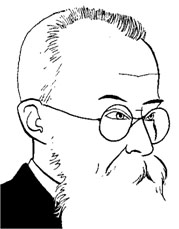
of Nikolai Rimsky-Korsakov’s last great opera, Zolotoi Petushok (“The
Golden Cockerel”). It may be the only way to sing in tune with the Russian
leadership, as it finalizes its agreement with the North
Atlantic Treaty Organization (NATO).
That’s if you can bear to watch one of the most artful political satires
in Russian musical culture disintegrate under pressure from today’s rules
of political correctness.
(more…)
by John Helmer - Saturday, May 17th, 1997
No Comments »
- Print This Post
By John Helmer in Moscow
When Tony de Almeida, the musicial director of the Moscow Symphony Orchestra, telephoned in January to say I’d be sure to enjoy his next concert at the Conservatoire, he was doing what Tony did naturally and energetically. He was promoting the orchestra and the music he believed in to those he knew shared his passion for Russian music. Tony made the music; I loved to listen.
When the concert announcement changed and Tony’s name was placed by another conductor, I sent a message to his home at St. Remy de Provence, near Marseilles, hoping there was no mischance. When he didn’t respond, I began to suspect there had been. I didn’t hear from him again. Tony died on Tuesday. He was 69.
I knew how fragile his health was. Sitting at dusk on a balcony overlooking Moscow’s golden domes, as the swifts raced and dived in the August air, Tony described how he was living on borrowed time. Only he didn’t say it that way, and I don’t know if that’s what he thought.
Tony had convictions on most every subject or person we ever talked about. I don’t know if he had a conviction about his own mortality. He was too energetic, too preoccupied with raising money for the orchestra, negotiating better terms for the recording contracts, obtaining gifts of fresh instruments, more salubrious rehearsal space, better scores, etc., etc.
(more…)
by John Helmer - Saturday, February 22nd, 1997
No Comments »
- Print This Post
Drive north from Moscow, and the road passes Foolish Women Ville (Durikino).
Drive east, and you will come upon the village of Silly Lady (Durovo).
What misfortune or humourlessness in their rural past induced Russians to fix the stigma of stupidity on their places of living — and put the blame firmly on women?
In the village where I spend my weekends (Johnnyville, Ivanchikovo), the village women say the boot is on the other foot.
It is the village men, their husbands first of all, who are the stupid ones. If it weren’t for them, for their drinking and laziness, they claim, the potato fields would be planted quicker; the goslings would not have been eaten by the crows; and the sheep would already be fat. (more…)
by John Helmer - Thursday, May 27th, 1993
No Comments »
- Print This Post
The Congress of People’s Deputies, Russia’s super-parliament, will not be called into session in October, according to officials in the office of the Speaker, Ruslan Khasbulatov.
The decision by Khasbulatov will allow President Yeltsin several weeks’ additional time before the expected confrontation with parliament over the president’s powers to implement his highly unpopular economic policy.
With the latest Moscow opinion polls showing the President’s rating almost static between July and August at the year’s low of 30 to 33 percent, Khasbulatov and his advisors are calculating that time is running out for Yeltsin’s economic policy.
Khasbulatov’s advisors told the Moscow Times that in a recent by-election to fill a parliamentary seat in the Dmitrovskiy constituency just outside Moscow, voters demonstrated even greater vulnerability for Yeltsin’s supporters in parliament.
According to poll results reported to Khasbulatov, only 21 percent of those eligible to vote cast ballots, although eleven candidates representing the main Russian parties had tried to make the campaign a test of popular feeling. The candidates who placed first and second are both middle-aged, former Communist Party officials with lengthy records of administration in the local area. They trounced supporters of the President’s reform programme. (more…)
by John Helmer - Tuesday, September 1st, 1992
No Comments »
- Print This Post
Senior members of the Russian parliament and their staff advisors have not seen the text of the Russian agreement with the International Monetary Fund (IMF), although the government has made commitments which require parliamentary approval.
Interviews with deputies and officials of the Supreme Soviet this week also indicate that some of the provisions of IMF agreement may have infringed on parliament’s authority.
The Moscow Times has been told that although the agreement texts were despatched to the IMF between July 5 and July 15, they were not disclosed to the Speaker of the Supreme Soviet, Ruslan Khasbulatov, the secretariat of the presidium, which
is the executive agency of parliament, or the Chairman of the Supreme Soviet’s Committee on Budget, Planning, Taxation and
Prices, Aleksandr Pochinok.
Parliament was in session during that period. It is now in summer recess, and will resume again in a fortnight. (more…)
by John Helmer - Thursday, August 27th, 1992
No Comments »
- Print This Post
By John Helmer in Moscow
Today marks the anniversary of Boris Yeltsin’s election as President of Russia.
It is no moment for celebration.
The government which he led successfully over the attempted putsch of last August and through the disintegration of the Soviet Union now lacks credible authority in the Russian federation and among its people.
There is no agreement on a constitution to hold the federation together, or to divide the power granted by Russian votes for
president and parliament.
(more…)
by John Helmer - Friday, July 10th, 1992
No Comments »
- Print This Post
News Analysis
By John Helmer in Moscow
In lengthy voting and debate on Saturday and this week, the Russian Congress of Peoples’ Deputies showed that a majority wants to develop in the direction of the American Congressional pattern, sharing power with President Yeltsin in a system of checks and balances.
The Congress votes also showed that the largest obstacle in the way is not the communists, whose strength has dropped significantly, but Mr Yeltsin himself and those of his advisors who demand more power for the executive branch of government.
The latest series of votes demonstrates that despite their resistance to this, a majority of deputies is in a mood to strike a working compromise with Mr Yeltsin. The uncompromising tactics of the so-called “left-right” bloc command between 250 and 350 votes — roughly a third of the Congress, but not enough to win a major policy division.
(more…)
by John Helmer - Thursday, April 30th, 1992
No Comments »
- Print This Post
By John Helmer in Moscow
The soft-spoken general is wearing civilian clothes — a trim double-breasted suit, with a paisley tie discreetly knotted at
a pressed white collar.
It is not the uniform of the old nomenklatura, nor of the new entrepreneur.
The silver flecks in his thick hair convey photogenic authority. The high cheek-bones, grey-green eyes and chiselled jaw signal for the television audience an unmistakable Slav.
(more…)
by John Helmer - Wednesday, April 29th, 1992
No Comments »