


By John Helmer, Moscow
@bears_with
In fighting the first-ever war of elimination between the US and Russia, the ghost of Lenin is haunting the Russian oligarchs. But it’s the ghost of Stalin in the corridors of the Kremlin.
(more…)By John Helmer, Moscow
@bears_with
In fighting the first-ever war of elimination between the US and Russia, the ghost of Lenin is haunting the Russian oligarchs. But it’s the ghost of Stalin in the corridors of the Kremlin.
(more…)
By John Helmer, Moscow
@bears_with
Nothing is more certain than that wars make fortunes for gunmakers and pandemics make fortunes for vaccine makers.
It’s uncertain whether it’s the market, the politics, or the science which advances some vaccines at the expense of others. In the 150-year history of medical markets, the Covid-19 vaccines have been fastest from the science to the money – faster and further ahead of the vaccines for measles, hepatitis, cervical cancer, and polio. At this speed, profit and share price have done most of the talking, followed by the politics of regulator approval. It’s too soon for science to measure and report the long-term benefit versus harm of these Covid-19 vaccines, especially the genetic engineering types known as messenger ribonucleic acid (mRNA).
After two years of the coronavirus, the World Health Organization (WHO) reports there are 148 vaccines currently under clinical testing. It’s quite late for most of them to make back their cost, let alone earn super profits.
The US has developed two of the vaccines, Moderna and Johnson & Johnson (Janssen), and with German science, produced and marketed a third, Pfizer-BioNTech. China has developed and marketed three major vaccines – Sinopharm, CoronaVac, Convidecia – and several minor ones. India has produced more than three, as have Cuba and Iran. Turkey, Kazakhstan, and the UK have produced one each; the last of them, Oxford-Astra-Zeneca is the runner-up to Pfizer in reach worldwide. France’s Sanofi has produced one, but it has yet to reach market.
Russia has produced three Covid-19 vaccines – Sputnik (Sputnik V and Sputnik Lite), EpiVacCorona, and CoviVac.
Vaccine market entry decided by national and international regulators is a measure of political and corporate power; global dosage totals are the result. Pfizer has dominated the European Union market with roughly three times the number of doses administered than all its competitors combined. In rank order after Pfizer come Moderna, Astra-Zeneca, Johnson & Johnson, Sputnik, Sinovac and Sinopharm. In the US market, Pfizer dominates with a 59% share; Moderna with 38%; Johnson & Johnson with just 3%. Non-American vaccines have been kept out of the American market entirely. That isn’t the result of science.
But in the world as a whole, China and India lead in the aggregate of doses; Cuba, the United Arab Emirates, and Chile lead in the number of doses administered per hundred people.
By contrast with the global and European standards, Russians have been more resistant to vaccination and more skeptical of the science. With a dosage per hundred people of 111, the Russian vaccination rate has been half the European Union average; a third the US rate; about equal to Honduras or Pakistan.
In the Russian market this is the short story of CoviVac — the vaccine which has tried to make its way against oligarch money, Moscow politics, and the paradoxical contest of one of the most advanced vaccine science establishments in the world with one of the most coronavirus skeptical of populations.
(more…)
By John Helmer, Moscow
@bears_with
A new judge has been appointed out of retirement by the British Government to run a public inquiry into the cause of death of Dawn Sturgess in July 2018. He is Anthony Hughes, Lord Hughes of Ombersley, 73, who retired as a judge of the Supreme Court, the highest of the British courts, in 2018. A specialist in criminal law, he was a Court of Appeal judge between 2006 and 2013, and a High Court judge from 1997 to 2003.
The Hughes appointment was announced in the House of Commons on Thursday.
The cause of Sturgess’s death was declared by British government officials before the medical evidence and witnesses had been examined and tested in court and in public. The government has published its conclusion on the website of the Sturgess inquest. “Dawn Sturgess was pronounced dead at Salisbury District Hospital on 8 July 2018. The post mortem indicated the cause of her death was Novichok poisoning.”
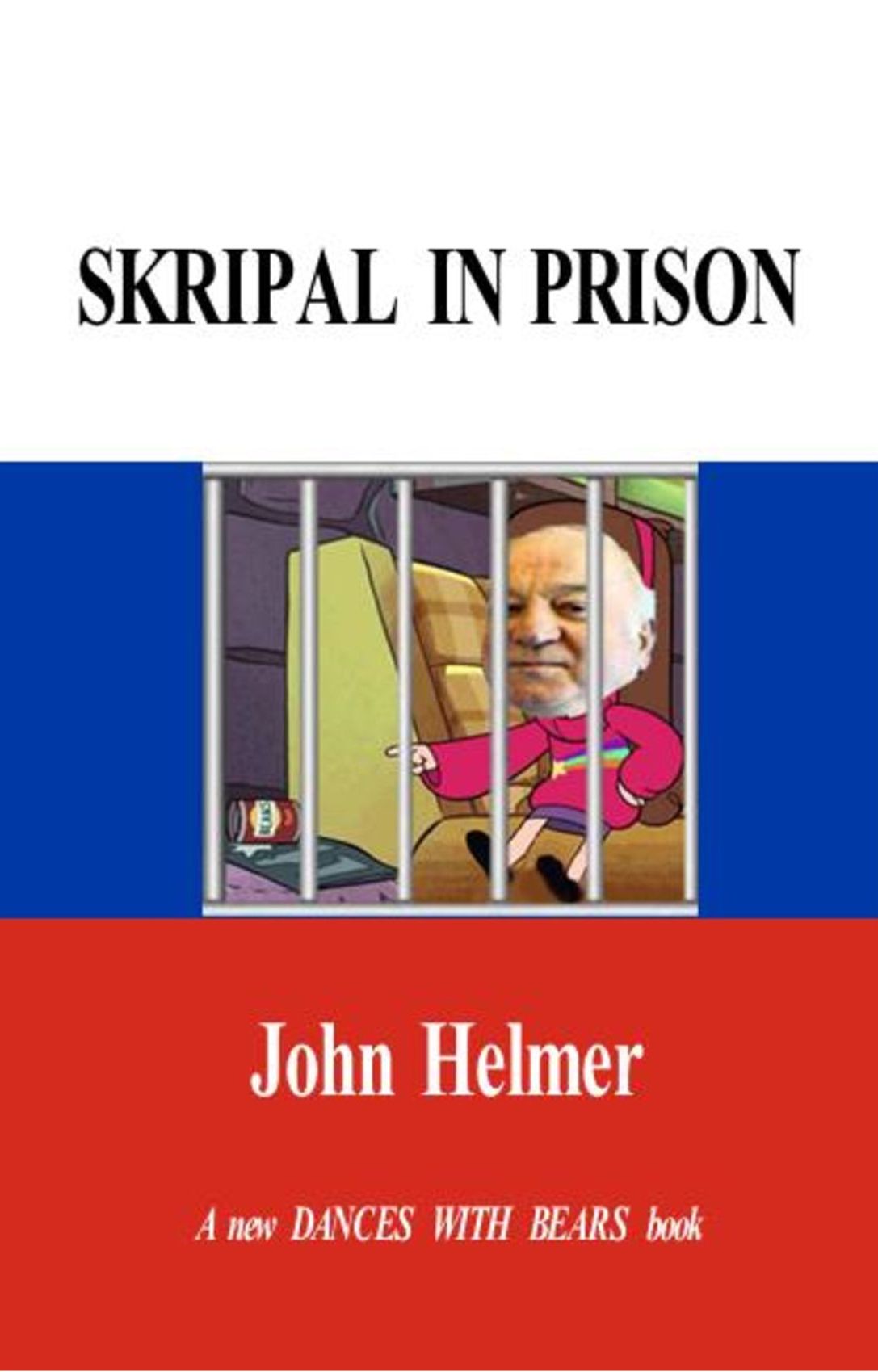
This allegation has been part of the government’s narrative that the Russian-made nerve agent Novichok was brought to London, and then to Salisbury, by two Russian soldier assassins as part of a plot ordered by the Kremlin to kill double agent, Sergei Skripal. The attack on him on March 4, 2018, failed.
Skripal, as well as his daughter Yulia Skripal, survived, although not to tell the tale.
For four years now they have been held incommunicado by the British secret services; they may be imprisoned; they may be dead. They have been excluded from giving any evidence in court on what happened to them. They have been prevented from contacting their family in Russia, and speaking in public and to the press.
Hughes’s appointment this week follows the controversial and unexplained replacements of two coroners investigating the chain of Novichok allegations leading to Sturgess’s death. Hughes himself was not picked for the post for several months.
With an unusually modest public career record and no media reporting of his judgements over his 21-year career on the bench, Hughes appears to be about as obscure a figure as the government could have found.
However, the archive of his Court of Appeal judgements reveals that Hughes is a stickler for the criminal law rules on the inadmissibility of tainted and hearsay evidence, and on rejecting faulty directions by judges to juries before their verdicts. Whether Hughes has been selected for the Novichok job because officials believe he can be counted on to stick to the official narrative, or whether his record for quashing unsafe convictions will prevail this time round is about to be tested.
(more…)
By John Helmer, Moscow
@bears_with
The first Moscow casualties of the US and European plan targeting President Vladimir Putin and triggering Kremlin regime change have been revealed in the release over the past ten days of three presidential decrees and a half-dozen implementing orders from the Russian prime ministry.
The breaking news is that there are no casualties — but one rumour of one casualty circulated by the spokesman of the president, Dmitry Peskov, in order to deny it.
Early on Wednesday afternoon, the state news agency RIA-Novosti published the headline, “The Kremlin knows nothing about the rumours of Nabiullina’s resignation, Peskov said.” He was referring to the Governor of the Russian Central Bank (CBR), Elvira Nabiullina, who has been in the job since 2013.
The 10-line report went on: “’No, we don’t know about that. The president has repeatedly assessed [favourably] the work of the Central Bank,’ Peskov said, answering a question from journalists whether the Kremlin is aware of the alleged resignation of Elvira Nabiullina from the post of head of the Central Bank and how the president assesses the work of the Central Bank. Earlier, Peskov said that Putin repeatedly praised the work of the Central Bank in general and its head Elvira Nabiullina in particular.”
Until Peskov issued this denial, there was no trace of a rumour in the Russian media that Nabiullina was thinking of resigning, or that the Kremlin had decided to remove her.
There has been active public criticism of Nabiullina’s decision to raise the Central Bank lending rate to 20%, and her apparent unpreparedness to combat the US sanctions, which have frozen more than $450 billion in Central Bank currency reserves, and cut Russia’s leading banks from the SWIFT transaction system.
Leading the attack on Nabiullina has been Sergei Glazyev, the former Kremlin economic adviser and now the minister in charge of macroeconomic policy at the Eurasian Economic Commission. Glazyev has been joined by Mikhail Delyagin, an economist and State Duma deputy. They have accused Nabiullina of “aiding the enemy”.
“If our country is a sovereign state,” Delyagin said on television on March 4, “then why is Ms. Nabiullina still the head of the Bank of Russia, and not under investigation? We have people in jail for economic crimes, and yet a person who has already caused the economy to crash in 2014 and is going to do it for the second time feels just fine at her freedom.”
What can be detected in the series of Putin decrees and orders by Prime Minister Mikhail Mishustin is that a group of officials led by Mishustin, Defence Minister Sergei Shoigu and Federal Security Service Director (FSB) Mikhail Bortnikov, have taken charge of the new scheme to restrict Russian debt repayments to creditors in countries listed as hostile. This group is known as the Commission for Control of Foreign Investments (CCFI). According to Mishustin’s order No. 431-r of March 6, 2022, Nabiullina is not a member.
(more…)
Interview with Andrew Nekrasov by Florian Rötzer, translated from German by John Helmer, Moscow
@bears_with
Andrei Nekrasov (lead image, left) is a Russian screenwriter and playwright, film and theatre director, and philosopher who emigrated from Russia in 1980.
Born in St Petersburg in 1958, he studied acting and directing at the Russian State Institute of Performing Arts; literature and philosophy at the University of Paris; and film-making at the film school of Bristol University. He has written and directed plays in German in Bonn and Berlin.
He conducted this interview in German, and declined to say where he is currently living, except that it is a “neutral country”. Here are his career credits and fifteen films.
Florian Rötzer (right), 69, was co-founder and editor-in-chief of the online magazine Telepolis published by Heise Verlag between 1996 and 2020. Since January 2022, he has directed the online magazine, Krass & Konkret, published by Buchkomplizen and Westend Verlag.
(more…)
By John Helmer, Moscow
@bears_with
Yesterday, one hundred and forty-two thousand Ukrainians crossed the border into Poland as war refugees, according to Warsaw state television. This is the highest daily rate since the military operations in the country escalated on February 24.
A total of 1,027,603 refugees have entered Poland from the Ukraine between February 24 and March 6, according to data of the United Nations High Commissioner for Refugees (UNHCR). The daily average is just under 103,000.
Before February, the eight-year civil war between the Kiev regime and the people’s republics of Donetsk and Lugansk had triggered the UNHCR calculation of 1.8 million people in “need of humanitarian assistance”, almost all of them in the people’s republic territories.
In Polish terms, the cross-border movement in the past two weeks far exceeds the refugee flow through Turkey into Poland from the wars in Afghanistan, Iraq, Syria, and Libya; that number peaked between 2009 and 2015. In those years, refugee arrivals in Poland averaged 15,111 per annum, 1,300 refugees per month, 42 per day. By 2021, the refugee number arriving in Poland had dropped to just 2,811 for the full year.
Yesterday Polish Prime Minister Mateusz Morawiecki issued an appeal to the European Union (EU) states for their help to take the refugees from Poland as soon as possible, and in the meantime pay the Polish government for the costs of refugee accommodation and assistance.
“This is the largest migration crisis in Europe since World War II,” Morawiecki said. “We need systemic measures and Poland is taking them…Today, Poland and other Central and Eastern Europe take the greatest burden in organizing humanitarian aid…I appeal to all leaders and citizens of the European Union: this is our common cause and responsibility.”
Over the weekend the Ukrainian refugee movement to all European countries reached 1.7 million. They far exceed the peak flow of Syrian, Iraqi and Libyan refugees which the Turkish Government was sending into Europe at a rate of 150,000 per month during 2015. Between 2015 and 2021 Turkey has been offered two tranches of €6 billion from the EU to accept and accommodate 3.5 million refugees from the bordering Arab states, and keep them from moving on to the EU.
In the past week the Anglo-American and European media have been publicizing stories of volunteer efforts at welcoming the Ukrainian refugees. Unpublicized, however, the political and economic resistance on the part of governments, political parties, labour unions, and social media is growing rapidly. The threat of the human cannon which Turkish officials have used to bargain for EU membership and cash is now being deployed, not only by the Poles, but also in bitter recriminations between the French and British.
Earlier this week the French Interior Minister accused the British Home Secretary of saying one thing, doing another towards the Ukrainians at Calais waiting to cross the Channel to Dover. The British are stalling the admission of the refugees in a fashion that is “completely unsuitable” and “lacked humanity”, the Paris official said.
(more…)
By John Helmer, Moscow
@bears_with
Nationwide polls revealed brimming Russian confidence in the future and also in the political leadership of the country in the month of February, before the announcement by President Vladimir Putin of the military operation against the US plan of attack in Ukraine.
The single largest jump in confidence in Putin and in Prime Minister Mikhail Mishustin was registered in the week of February 20 to 27; that’s between Putin’s speech of February 21 announcing the US plan of attack and Russian recognition of the Donetsk (DPR) and Lugansk (LPR) people’s republics, and his speech of February 24 initiating the full-scale operation to demilitarize the Ukraine.
The first, and so far the only Russian poll to have been taken on the operation itself and published on March 5, shows 84% public support for the army, the highest level ever recorded; and 71% approval for the operation in the Ukraine. Disapproval was reported by one in five Russians, 21%. The poll was taken by telephone last week, and was published by the All-Russian Centre for the Study of Public Opinion (VTsIOM) on March 5.
Roughly one-half of Russians back the demilitarization objective and say they believe the military campaign aims to defend Russia and prevent the deployment of NATO bases on Ukrainian territory. Support for the de-Nazification objective is less. One in five believes the operation is being carried out to purge the Ukrainian fascists and change the political course of the Kiev government toward Russia (19%); 18% think the goal is to protect the Russian–speaking population of the DPR and LPR.
A Boston newspaper reporter of Canadian extraction has attempted to explain away the poll results as a case of “average Russians experiencing a rally-round-the flag moment”. The reporter said he himself prefers the opinion of “thousands of mainly urban, educated Russians [who] have taken to the streets in recent days and signed petitions to express their dismay over the unprovoked attack”.
(more…)
By Olga Samofalova, translated and introduced by John Helmer, Moscow
@bears_with
The ancient difference between the confiscation of your assets and a tax by force was the mandate of Heaven. This was the public announcement from God, transmitted through fellows wearing funny hats and costumes accompanied by drumbeats and whistles. When God wants to stick you up, they said, you’d better hand over your money or your life.
These days the rulers of the US, the European Union (EU) and Canada call this the “Rules Based Order”. That’s to say: I make the rules, you take my orders. The meaning is still the ancient one – your money or your life.
The Chinese empire has been famous for a dress-up ceremony in which those who made the rules received the agreement of those who took the orders. It was called the kowtow. Nine kowtows were the standard, plus expensive gifts. The Roman empire and most of its successors, called it tributum, tribute. Over the years, other names for it have been tax, protection money, and a gender specific form of kowtow popular in England and France called the ius primae noctis, droit de seigneur, or lord’s right.
The quaintness of the ceremony varies from place to place. The British empire demanded its colonial peoples wave a small Union Jack in the left-hand corner of their independence flag. They also required their subject children’s pilgrimage at least once in their lives to the fence of Buckingham Palace in London for at least one performance of the Changing of the Guard.
In keeping with the times since 1945, the US empire has been more straightforward. It doesn’t require pilgrimages to the White House fence for children of tender age. It does require you keep the US dollar in your pocket, or the local currency whose value is fixed in proportion, and whose state surpluses of taxation and pension funds must be stored in US Treasury notes, as well as the dollar.
In Russia, starting in 1991, Boris Yeltsin innovated on these measures by inviting US advisors to run the Russian economy, which Yeltsin paid for by imposing a 100% tax on ordinary Russians’ salaries. This started the system of oligarchs whom Yeltsin allowed to dispatch and store, tax free, in the US, UK and EU as much state capital and income as they could carry off. How that system has worked for the past thirty years, oligarch by oligarch, has been the subject of analysis here. The effort has not gone without recognition.
At this very moment, the oligarchs are facing a Christian tax, but it’s not the Russian one you might think they have earned. Instead, the 100% tax is being imposed in the form of confiscation statutes by the US, UK and EU. This is not economic warfare so much as the application of the principle that what the oligarchs have been doing to Russians should now be done to them, according to the Mandate of Heaven as recorded in the Gospel of Matthew 7:12, Luke 6:31.
The Mandate of Heaven can also be found on the bottom of the US dollar note. That’s the signature line where the Treasurer of the United States and the Secretary of the Treasury promise to pay “all debts public and private”. Like other US treaty signatures, this no longer applies to Russians, common ones, oligarchs, or the state, according to this novelty in the Rules Based Order. Russians must now sell everything in the country of value for US dollars – oil, gas, coal, uranium, aluminium, titanium, wheat, potash, urea, bank loan debts, airplane leases, etc. But those dollars cannot be used by Russians to buy anything else. That value has been confiscated.
The response is still being formulated in Moscow. Russian government officials, members of the State Duma, the Central Bank of Russia, the General Staff, the oligarchs and their lobbyists have yet to agree. The terms of the debate are still largely secret; here was an opening shot against the Central Bank by Sergei Glazyev.
(more…)
By Nikolai Storozhenko, translated and introduced by John Helmer, Moscow
@bears_with
The US has been installing American-directed military bases in the Ukraine for stockpiling advanced weapons to strike Russia by land, sea, and air.
In these plans for attack deep across the Russian frontier, Ukraine was already a platform with the potential for nuclear battlefield operations without formal admission to the North Atlantic Treaty Alliance (NATO); without acceptance by the NATO member states; without comprehension or vote of approval by the Ukrainians themselves.
On December 17, the Russian Foreign Ministry proposed a non-aggression treaty with the US which included explicit provisions to negotiate the withdrawal of this threat. Article 3 proposed “the Parties shall not use the territories of other States with a view to preparing or carrying out an armed attack against the other Party or other actions affecting core security interests of the other Party.” Article 4 of the pact proposed: “The Russian Federation and all the Parties that were member States of the North Atlantic Treaty Organization as of 27 May 1997, respectively, shall not deploy military forces and weaponry on the territory of any of the other States in Europe in addition to the forces stationed on that territory as of 27 May 1997.” Article 5 said: “The Parties shall refrain from deploying their armed forces and armaments, including in the framework of international organizations, military alliances or coalitions, in the areas where such deployment could be perceived by the other Party as a threat to its national security, with the exception of such deployment within the national territories of the Parties.” Articles 6 and 7 were more explicit on the deployment of nuclear weapons: “The Parties shall undertake not to deploy ground-launched intermediate-range and shorter-range missiles outside their national territories…The Parties shall refrain from deploying nuclear weapons outside their national territories.”
The State Department reply released on February 2 dismissed each of these proposals.
On February 19 in Munich, Ukrainian President Vladimir Zelensky made his threat to deploy nuclear weapons on Ukrainian territory; he expressed this as his unilateral revocation of the 1994 Budapest Memorandum although Ukraine was not a signatory of the agreement.
“This is not empty bravado,” President Vladimir Putin responded two days later in his Donetsk and Lugansk recognition speech on February 21. The Ukraine threat to attack Russia was “a foregone conclusion, it is a matter of time”, Putin added.
It is Operation BARBAROSSA, the code name of the German invasion of 1941, in slow-motion.
(more…)
By Sergei Glazyev, translated and introduced by John Helmer, Moscow
@bears_with
On Friday morning, February 25, Sergei Glazyev published the following analysis of US sanctions against the Russian economy and of the Russian options for defence and counter-attack.
Glazyev is a Russian state official with ministerial rank. He has served for many years as an economic policy adviser to President Vladimir Putin; since 2019 he is the minister for integration and macroeconomics of the Eurasian Economic Commission, the bloc of former Soviet states coordinating customs, central banking, trade and fiscal management policies together.
Glazyev, now 61, has also been the longest surviving force on the left of Russian policymaking since the end of the Soviet Union in 1991 and of Boris Yeltsin’s destruction of the Congress of People’s Deputies in 1993. He has been a consistent critic of the monetary policies of the Russian Central Bank; and of the oligarch system promoted by Anatoly Chubais, Alexei Kudrin, German Gref and their business allies in Moscow, and by the financial centres of New York and London. For 25 years they have proved stronger inside the president’s circle than Glazyev; they have persuaded Putin to overrule him publicly, then ignore and sideline him. Until now.
Commencing with Putin’s February 21 speech, the recognition of the Donetsk and Lugansk People’s Republics, and the commencement of the military campaign in the Ukraine, the management of the Russian economy has moved on to a war footing. In the interpretation of a leading European banker, the escalation of US and European Union (EU) sanctions intends to confiscate Central Bank assets and destroy all financial links between Russia and the west. He comments that nothing on this scale against a major world power has been attempted since President Franklin Roosevelt froze the foreign assets of Japan on July 26, 1941, and imposed an embargo on Japanese oil and gasoline imports six days later.
The new sanctions commenced on February 22 in response to Russian recognition of Donbass independence, and the signing of a treaty of military and economic cooperation. The first sanctions strike targeted two state banks; three sons of Russian state officials; and state bonds to be issued from Wednesday of this week.
The second-strike sanctions escalated on February 24 to “target the core infrastructure of the Russian financial system — including all of Russia’s largest financial institutions and the ability of state-owned and private entities to raise capital — and further bars Russia from the global financial system. The actions also target nearly 80 percent of all banking assets in Russia and will have a deep and long-lasting effect on the Russian economy and financial system.”
In addition, the targets were expanded to include for the first time state-owned Alrosa, the diamond producer and international diamond market maker; and Sovcomflot, the world’s largest energy tanker fleet operator. At the same time, the US Treasury said it would not block Russian payments for “agricultural and medical commodities and the COVID-19 pandemic; overflight and emergency landings; energy.”
The third strike began overnight between February 26 and 27. The White House announced the disconnection from the SWIFT interbank payments system for “selected Russian banks” . Russian press reporting has speculated that Sberbank and VTB will be disconnected, along with the other banks targeted on February 24. It is not clear whether Alfa Bank, the leading commercial bank owned by Mikhail Fridman, will appear on the SWIFT disconnection list.
The White House also announced the launch of “a multilateral Transatlantic task force to identify, hunt down, and freeze the assets of sanctioned Russian companies and oligarchs – their yachts, their mansions, and any other ill-gotten gains that we can find and freeze under the law.”
US and European Union officials are claiming that “restrictive measures that will prevent the Russian Central Bank (CBR) from deploying its international reserves” amount to a freeze on the Central Bank’s US dollar and Euro denominated holdings. As of January 31, the CBR reported holding $469 billion in foreign exchange. Of that aggregate, year-old CBR data suggest that 22% is in US dollars; 29% in Euros, and 6% in British pounds.
London banking sources and a leading oil trade figure believe that if the third-strike sanctions halt US dollar and Euro payments for Russian oil, gas, coal, titanium, palladium, diamonds, and other commodity exports, along with servicing of interest and principal loans, then the Russian side will stop all debt payments. They will also stop all deliveries to the US and Europe.
The domestic Russian political implications are not less dramatic; they are potentially revolutionary, though not in the direction US figures like Antony Blinken, Victoria Nuland, and William Burns have been calculating in public. Glazyev is one of the Russian revolutionaries they least want to see take power over the oligarchs now.
For reporting on Glazyev’s responses to the first round of US sanctions in March 2014, read this, For a longer archive on Glazyev back to 1993, click to open.
(more…)



| S | M | T | W | T | F | S |
|---|---|---|---|---|---|---|
| 1 | ||||||
| 2 | 3 | 4 | 5 | 6 | 7 | 8 |
| 9 | 10 | 11 | 12 | 13 | 14 | 15 |
| 16 | 17 | 18 | 19 | 20 | 21 | 22 |
| 23 | 24 | 25 | 26 | 27 | 28 | 29 |
| 30 | 31 | |||||