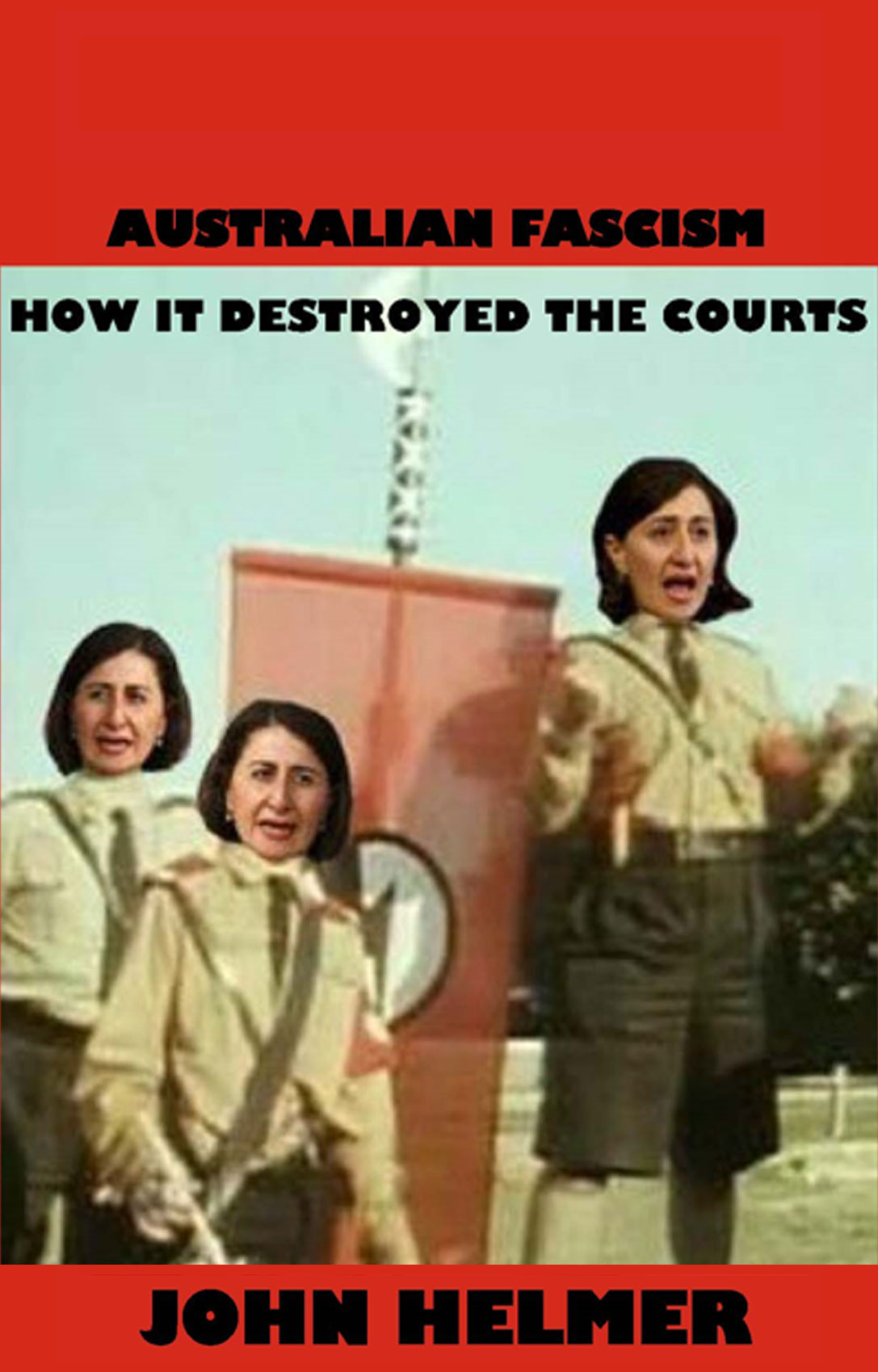
The release by the Dutch prosecutors of their presentations last week in the MH17 trial before The Hague District Court reveal the extent of the incompetence and negligence of the two Dutch lawyers paid by Moscow for the defence – Sabine ten Doesschate (lead image, centre) and Boudewjin van Eijck (right). The two lawyers, whose previous experience of criminal defence trials has been limited to defending the Dutch police, are keeping secrets which not even the prosecutors are concealing now.
The Dutch Government’s trial of the Russian Government for shooting down Malaysia Airlines Flight MH17 reached new lows on Thursday when it was revealed in court that the US Government continues to conceal the satellite evidence alleged to show a BUK missile firing at the aircraft; that the release on Dutch television of thousands of telephone taps of one of the Russian soldiers accused of the shoot-down was the work of the Ukrainian Security Service (SBU) and by a source among the Dutch police and prosecutors; and, finally, that an investigating judge has decided in secret to prevent any cross-examination of the Dutch government experts responsible for reports allegedly proving the prosecution’s case.
That investigating judge was acknowledged in court yesterday to be playing a more decisive role than the president of the trial, District Court judge Henrik Steenhuis. Her name is being kept a state secret.
Two Swiss bankers charged with money-laundering crimes in aid of the fugitive Russian banker Sergei Pugachev went before the Swiss federal criminal court last week. The trial was brief; no reporters were present; and the lawyers are trying to keep the bankers’ names secret. They refuse to say if the verdict has already been agreed with the court.
There have been only two painstaking records that an English journalist named Catherine Belton (lead image, centre) has been the fabricator of Russian oligarch and regime-changing plots when she was a Moscow reporter for the Financial Times, and since she moved to Reuters and published a book called Putin’s People: How the KGB Took Back Russia and Then Took on the West.
The first record was mine, in print. The new one is Roman Abramovich’s – his is in the High Court in London.
The archive of my research started in 2008. Through 29 instalments it has followed Belton’s associations with the oligarchs Mikhail Khodorkovsky, Oleg Deripaska, Suleiman Kerimov, and most visibly, Sergei Pugachev. In 2009 Belton won the Cat’s PAW (Personal Abasement Award) for publishing material about Kerimov, declining the efforts of the award committee to obtain verification of her claims. The review of her book, published in April 2020, is the only one in print to identify its fabrications as a religious tract for “people who believe in the work of the devil, and who are paid to persuade other people to believe the same.” President Vladimir Putin is the devil in the Belton-Pugachev story. Casting him out is their mission.
Abramovich has come to the same conclusion. Starting a year ago, his representatives complained at Belton’s claims, and issued warnings to her that they would sue to stop the lying. Belton and her London publisher HarperCollins, owned by Rupert Murdoch (lead image, left), “refused to apologise for, correct or even suspend the continued publication of the words complained of, despite [Abramovich] placing them on notice of the false and defamatory nature of the allegations shortly after the electronic publication of the Book and prior to first publication of the hard copy version of the Book.” That was between April 2 and April 16, 2020, according to Hugh Tomlinson QC, Abramovich’s counsel.
Almost a year later, on March 22, 2021, Abramovich filed suit in the High Court against Belton and HarperCollins. The text of the initial claim has just been released by the court registry.
“The political climate is one of deep suspicion and mistrust towards President Putin and the Russian State,” Tomlinson for Abramovich has written, “with the result that allegations that the Claimant [Abramovich] has a close and corrupt relationship with President Putin and covertly acts under his direction will inevitably cause very serious harm to the Claimant’s reputation.” Belton and her publisher, Tomlinson charges, “have gravely injured the reputation of the Claimant and has caused him damage and upset.”
Abramovich is seeking damages, including aggravated or penalty damages; together with a stop to the circulation of the book, and all legal costs. If Abramovich wins at trial, and depending on how long and expensive the proceedings will be, London lawyers estimate that Belton and Murdoch will face a penalty of up to £1 million. The combined legal costs, however, may reach £50 million.
The political risk for exposure of the Belton-Pugachev plot as a pack of lies is even more expensive. Not before has a British court adjudicated the truthfulness of these claims.
The Novichok case, which began in Salisbury, Wiltshire, on March 4, 2018, is so open and shut that no judge, neither a provincial solicitor turned county coroner like David Ridley, nor an ennobled judge of the Court of Appeal like Baroness Heather Hallett (lead image, left), can have a moment’s hesitation in deciding the Russians are guilty. Because of his hesitation and uncertainty, however, Ridley was replaced by Hallett in January. After her first hearing on March 30, Hallett issued her first ruling on April 8. It was released publicly yesterday.
Alternatively, the Novichok case is so uncertain on the evidence, so contradictory in the witness claims, and so risky to Prime Minister Boris Johnson’s (right) policy towards Russia, that the case should be closed to public scrutiny, to cross-examination in court, and to other forensic testing.
In the paper Hallett has just issued she allows the fabrication to run safely away, but bolts the door on the risk of the truth escaping. Her inquest, she has ruled, is to run for just long enough to convict the Russian military and government of nerve-agent assassination; and then to convert the coroner’s court into a public inquiry, so that the only state secrets which will be allowed in evidence will be those selected by the state – but not enough to convict the British Government of negligence towards the victims, to whom the government may be liable to pay millions of pounds in compensation.
In a brief acknowledgement of her open-door policy, Hallett announced: “In denying Russian state involvement in the poisonings, the Russian authorities have required answers from the UK government on what it considers important questions.” This is Hallett’s only acknowledgement of the archive of public reporting of contrary evidence in the Novichok case. That not one of the important “Russian” questions has been answered by the UK, Hallett has omitted to reveal.
In the annals of warfare, armchair generals, cyber warriors, and media propaganda may speed up the decision to use force. They never decide the outcome.
Today, in Myanmar as in Donbass, eastern Ukraine, we have reached the point where words have stopped; sticks and stones have started. The further away these conflicts are from the armchair generals, the less they risk of their own interests; the more they see the advantages to themselves of chaos as a strategy for war without end. Chaos pays cyber warriors as much big money as shooting wars pay munitions makers and arms dealers.
For readers who are tired out by the long reads required to understand complex situations on battlefields in unfamiliar, faraway places, and for meda editors and proprietors, whose financial calculation is as simple and short as a tweet, the analysis which has preceded today’s broadcast is not simple enough. They complain that such analysis demands a huge amount of concentration to understand and decipher. Time is money — if the truth can’t be boiled down to a tweet, they tell themselves, their fear of failing to understand becomes too costly to bear. This is the way the tweeter turns into a twit, and the twit’s mind turns into substacked twaddle.
President Joseph Biden (lead image, left) has been showing symptoms of late-stage Parkinson’s Disease, which includes episodic dementia caused by Lewy Bodies (striatal amyloid plaques). President Volodomyr Zelensky (right) is suffering from memory failure, mood swings, and other neurological disorders after his hospitalisation for Covid-19 five months ago.
This report of how Ukrainians voted at their last chance is republished as an aide-memoire.
A veteran German source, whose family comes from Prussia and knows the history of wars on the Eastern Front very well, says that the Poles “are notoriously bad at bluffing. They threaten beyond their capacities. They invite trouble, and when it happens, they fold.” A veteran Polish source from Cracow, in Polish Galicia, says the same of the Ukrainians.
The Americans, both German and Polish sources agree, don’t understand bluffing at all because the proxy forces, Polish and Ukrainian, they are threatening Russia with will be sacrificed to their deaths, not American ones — if the Russians call the bluff now on the Donbass line.
At the Chancellery in Berlin these three things are so well understood, the silence of the German response to them has been deafening.
Two Swiss bankers will go on trial this week in the Swiss Federal Criminal Court charged with money-laundering offences when they supervised and assisted the movement out of Russia, then through Switzerland, of at least 700 million Swiss francs. The money was moved by Sergei Pugachev (lead image, left) between 2008 and 2010; at the time it was worth the equivalent of $720 million.
News of the trial was made public for the first time by the Swiss newspaper, Tribune de Genève, on Saturday. It appeared in German in its sister paper, Zurich’s Tages-Anzeiger at the same time. Both media are owned by the TX Group (aka Tamedia), the largest press group in Switzerland.
The bankers’ names weren’t reported in the newspapers, but will be identified later this week at the courthouse in Bellinzona; they were a former director and chairman of the board of Société Générale in Geneva, and his subordinate, the head of legal compliance at the bank. They were fined by the Swiss financial regulator nine months ago for breaching regulations and failing to report suspicious transactions through their bank by Pugachev. The two bankers have moved on to other employment but deny their guilt. They say Pugachev’s money wasn’t stolen or laundered by the bank on their watch. He was a political victim of the Kremlin, they will argue in court.
This is the case Pugachev has attempted in the UK High Court where it has been dismissed and he has been convicted of lying. It is also the case which Catherine Belton has turned into a book-sized indictment by Pugachev of President Vladimir Putin. The Swiss trial is the first in Europe to test the criminal case against Pugachev, how he came by his money, and what he did with it in hiding.
Belton; HarperCollins, the Rupert Murdoch company which published her book; and Reuters, Belton’s current employer, haven’t mentioned the Swiss government investigations of Pugachev which were running for a decade before last summer’s fines were imposed. They are also facing a direct trial of their veracity in a defamation action initiated by Roman Abramovich in the UK High Court last month.
“Our structure”, runs the pitch of Société Générale in Geneva, “is localized to human scale, allowing an entrepreneurial approach whose point of departure is always your need.” The bankers, and their bank, are now on trial for putting Pugachev’s need ahead of the law. “The Swiss system can take a very long time,” comments a well-known Swiss banker. “This case is a rare one in which the Russian evidence of the crime of a decade ago will be presented in open court now, for such high-ranking private bankers to account for themselves. In Switzerland such a case is almost unheard of.”
“The person attempting to travel two roads at once will get nowhere”. It’s a well-known Chinese maxim, especially in Myanmar (Burma), China’s backdoor to the Bay of Bengal, the Indian Ocean, and the Indian Navy’s forward defence line.
Russia’s policy towards Myanmar since the military takeover on February 1 is a case of proving the maxim mistaken. Although experts and officials in Moscow won’t say so aloud, it’s possible for Russia to pursue one strategy with two tactics; three more like.