- Print This Post Print This Post

By John Helmer, Moscow

The name Isaac (lead image, right), son of Abraham (centre) and Sarah (left) in the Old Testament book of Genesis, meant “he laughs”. That was because Isaac was conceived when his mother thought she was long past child-bearing,  so Abraham started laughing at her news. He got more serious, later in the story, when he prepared to cut Isaac’s throat. Abraham thought he was doing God’s bidding, until God sent down new instructions.

The Isaac after whom St. Petersburg’s cathedral (Isaakievskiy Sobor, Исаа́киевский Собо́р – lead image, extreme right) – Russia’s largest; world’s fourth biggest church — is a different one. He too got the lucky last laugh. That Isaac was a fourth century Syrian by origin, who was living as a hermit contemplating Christian theology when Valens ruled the eastern Roman empire in nearby Constantinople.  Valens was a nervous, insecure sort who, with his brother, the co-emperor in Rome, had taken power by assassination, bribery and regular shows of military force.

Isaac was a go-getter, and insisted Valens give him an audience. Valens wasn’t so nervous he saw every Christian hermit in from the desert, so he refused. Isaac got his own back by broadcasting the meme that Valens would die shortly in a fire.  Valens threw Isaac in prison for sedition, where he stayed until Valens did die (378 AD), and the new successor emperor released Isaac to run a monastery on his pledge not to issue any more emperor death threats. Isaac was lucky too, because of the four versions of how Valens met his death,  one of them included fire. All of them recorded that Valens’s body was never found.

Because Isaac died on May 30 (383 AD), and that turned out to be the birthday of Peter the Great (1672), the tsar decided to turn Isaac into the patron saint of the Romanov dynasty. That’s what the current 19th century cathedral, built to replace smaller structures on the site, means. Its name signifies  holy war on the enemies of the tsar and  Romanov dynasty. That’s one, but not the only reason, a group of Russian Church bishops have recruited Kremlin support to order  Georgy Poltavchenko, St. Petersburg’s governor, to overrule his earlier decisions,  ignore the courts, city parliament,  and thousands of citizen petitioners, cancel state ownership of the building,  and hand it to the Russian Church to become its property.  

“The Church”,  according to close observers of its affairs in Moscow, “has persuaded the Kremlin to allow it to act above the law, and outside the law, too.  Thieving Church banks like Peresvet go unprosecuted. When businessmen take real estate, the state’s or each other’s,  it’s called asset raiding, and the courts often intervene. Not when the Church is the raider. But even raiding is not enough. The state budget, and of course ordinary taxpayers are being required to pay for the Peresvet Bank bailout,  and for running St. Isaacs, while the priesthood hang on to their gains.” (more…)

- Print This Post Print This Post

By John Helmer, Moscow

Mikail Shishkhanov (lead image, left and right) is the chief executive and control shareholder of B&N Bank (Бинбанк, BiNbank), one of the fastest growing banks in Russia today. What is driving that growth, however, is a combination of state money and influence in circumstances open to challenge from government regulators for the bank’s lack of transparency. 

Four recent transactions by the bank and related-party companies involving Shishkhanov have drawn a  warning from Central Bank first deputy governor, Sergei Shvetsov,  that cash from the Central Bank and from privately subscribed pension funds is what is driving B&N Bank’s growth, and not too prudently or lawfully.  “Shareholders are trying,” said Shvetsov, “to use the resources of pension funds not only for public investment in public instruments, but also to finance projects, fully or partially affiliated with the shareholders themselves”. To secure against conflict of interest and insider dealing, Shvetsov proposed to exercise “strict supervision.”

Shvetsov is head of financial market regulation at the Central Bank of Russia (CBR). His role, according to the bank,   includes “countering malpractice in the financial market, including regulation and control over the observance of the requirements of Russian Federation legislation on countering the illegal use of insider information and market manipulation.”

This week the CBR was asked to clarify whether it is investigating related-party dealings in the sale of $150 million worth of  B&N Bank bonds to the  Safmar pension fund group, both  controlled by Shishkhanov;  the sale to Safmar of Rb3.2 billion ($44 million) in shares of Evroplan, a leasing company also controlled by Shishkhanov;  the sale to Shishkhanov companies of Rb32.4 billion ($500 million)  in shares of Russneft,  the oil company controlled by Shishkhanov’s uncle, Mikhail Gutseriev; and finally, B&N Bank’s role in underwriting the sale of $60 million in fraudulent Tatfondbank bonds, weeks before the Central Bank imposed bankruptcy administration on Tatfondbank. The CBR would neither confirm nor deny, explaining “we don’t comment on actions connected with active banks.”

When the Federal Service for Financial Markets (FSFM), the formerly independent financial regulator  now part of the CBR organization and directed by Shvetsov, was asked the same question, it replied: “We don’t comment on active banks and companies.”  

A Russian oil industry banker says “it’s clear from Russneft’s share trading record since last November’s IPO that there is almost no sale volume. Also, the share price isn’t responding to the price of oil or to the movement of the other Russian oil companies. That means Russneft is closely held. There’s a fake float, not a free float.” (more…)

- Print This Post Print This Post

By John Helmer, Moscow

Last year the government of Botswana decided to halt a 2-year old, multimillion dollar contract for its state mining company to purchase a nickel mine from Norilsk Nickel, Russia’s largest mining company. The government also decided to put its state nickel mining company into bankruptcy to protect against court claims from Norilsk Nickel. At the same time, the Botswanans tried arranging a buyout of their mining company by a penniless investment group in the United Arab Emirates.

A document, drafted on March 13 and circulating since then among Botswana Government officials, reveals details of the buyout and confirms that the Norilsk Nickel deal was negotiated in bad faith by the Botswanans without the money to pay for it.  The Botswanan Government then sought secret help from the South African Government to block the deal. 

This sequence of events, decided behind closed doors,   have so far cost Norilsk Nickel a contract worth $277.2 million, and the conviction that the Botswana Government cannot be trusted to honour either its obligations to foreign investors, or its promises of employment and prosperity to its own people. Mining sources in Gaborone, the Botswana capital, say it’s a case of politicians inexperienced in business “doing something either so clumsily they are culpably incompetent, or so cleverly they are corrupt. Either way the Norilsk Nickel case is a tragedy for the country.”

The deal was the last exit from Africa by the Russian company, convinced that Botswana is a much higher risk than has been admitted until now in reports of the International Monetary Fund, the World Bank, and Transparency International.  As for the smoking-gun letter, Sadique Kebonang, the Botswana mining minister to whom it was addressed, says: “I am unaware of it. I will look for it since you have brought it to my attention.” He declined “to respond to matters that are before court and are subject to the sub judice rule.” (more…)

- Print This Post Print This Post


By John Helmer, Moscow

Fifty years is enough time to tell the difference between a journalist whose memoir of growing up in Winnipeg failed to notice there were any Ukrainians in Canada; and another whose memory of growing up Ukrainian in Alberta failed to notice Canadians.

The first was Melinda McCracken (lead images, left and centre) whose friendship I first made in Montreal in 1967, when she was a reporter for Montreal and Toronto media. She died in Winnipeg almost twenty years ago, but left behind Memories Are Made of This –  a memoir of Winnipeg in the 1950s. The other is Chrystia Freeland (lead image, right), whose entire career, including time at the Globe and Mail in Toronto, has been spent promoting an idea of Ukraine for which she has advocated a war for which Canadians will go on paying into the future without end. (more…)

- Print This Post Print This Post


By Max van der Werff, Amsterdam

Original in Dutch and English translation, also by Max van der Werff, appear here

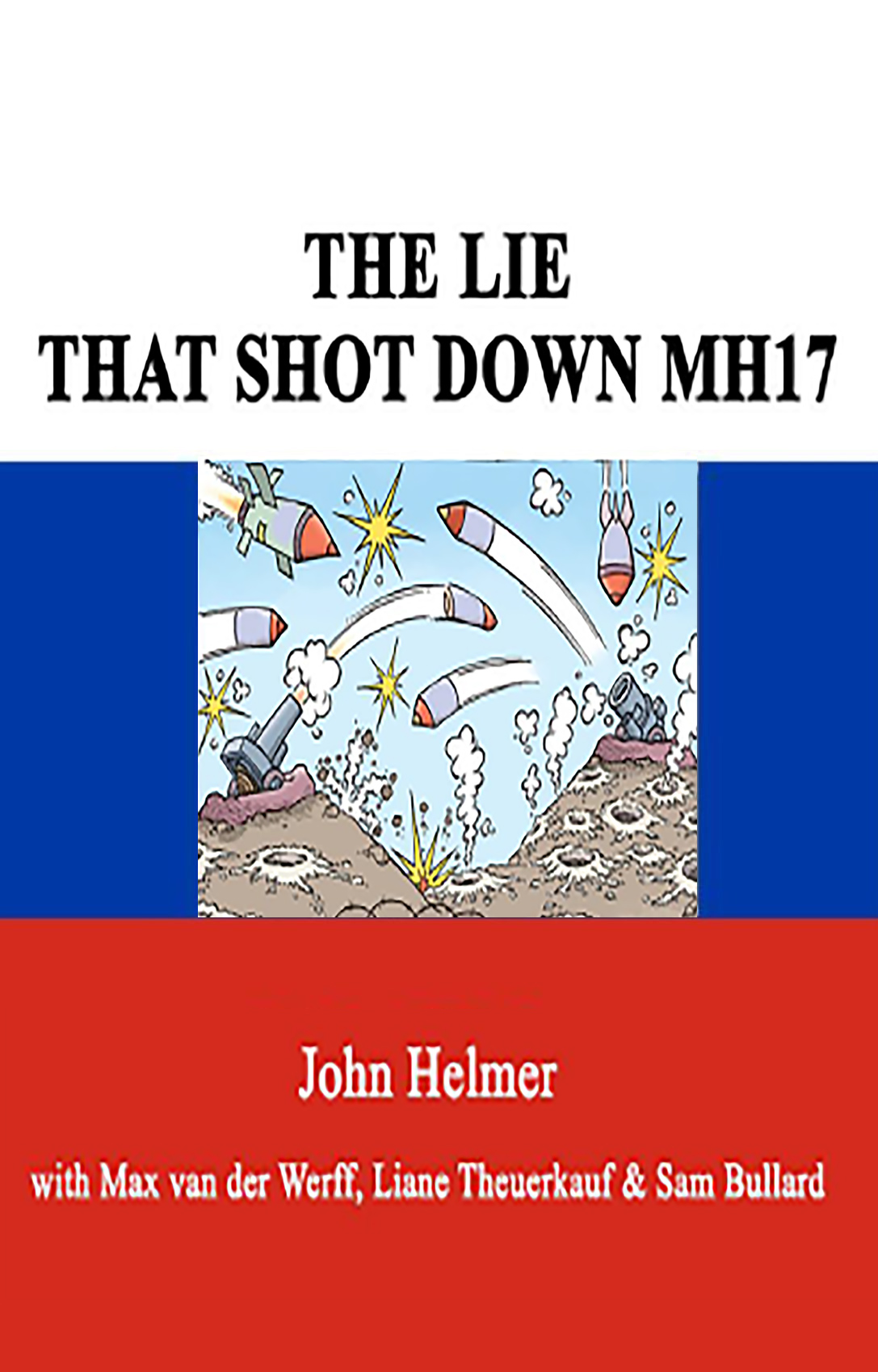
On April 12, 2017, a thousand days had passed since Malaysia Airlines Flight MH17 was shot down above East Ukraine. Up until now, those who did it have not been identified, indicted or arrested, and many questions remain unanswered. (more…)

- Print This Post Print This Post

By John Helmer, Moscow

Like you, I have been a frequent commercial airplane flyer for years. I don’t have a bone break or concussion to report from airplane or airport handling, though like you too, my luggage has suffered that, and worse. My teeth are falling out from natural causes. I have not been beaten up for insisting on my legal right to an aircraft seat I have paid for. But I have been the target of threatened violence by British Airways crews; arrest by personnel of Heathrow airport and Olympic Airways; abuse by female Qantas passengers who don’t know what decompression does to their infants’ ears; and Afghans without socks and shoes on Emirates Airline flights.

Through it all, my experience in flying has convinced me the two best airlines to fly if you are an economy-class passenger are Aeroflot and Cathay Pacific, the first because it is state owned, and second because it is Chinese. More of what this means after you fasten your safety belt and make sure your seat backs and folding trays are in the full upright position. (more…)

- Print This Post Print This Post

By John Helmer, Moscow

When US Secretary of State Rex Tillerson was telling the Russians and the US state press yesterday to stop hacking into American politics, sitting beside him was a former US Navy signals officer and  lawyer named Margaret Peterlin (lead image, red circle). Peterlin’s job for the last two years was managing a Boston company specializing in cyber warfare weapons, including the latest in US computer programmes to mimic foreign hackers and convince US  targets they have been hacked by Russians. Peterlin was also an advisor to Donald Trump during the presidential transition. Her targets then included Hillary Clinton and her campaign organization. (more…)

- Print This Post Print This Post

By John Helmer, Moscow

US Government officials and the official US media have wound up their meetings in Moscow with Foreign Minister Sergei Lavrov and President Vladimir Putin with one unexpected admission, one unprecedented demand, and a non-disclosure by the Kremlin which has never happened before. (more…)

- Print This Post Print This Post

By John Helmer, Moscow

How to rule a country which is a target of war by the mad figurehead of a military junta in another country?  

This is not a historical question about Joseph Stalin’s options in August 1939, before he and Adolph Hitler decided on the time-buying ruse known as the German–Soviet Non-aggression Pact.  Nor is this a current question about Bashar al-Assad and Syria, nor about Kim Jong-un and North Korea. 

It’s the question President Vladimir Putin is obliged to ask about Russia’s options facing a US regime in which, as the Kremlin now acknowledges, a military junta has installed itself behind President Donald Trump. “We have seen this all before”, Putin declared yesterday. (more…)

- Print This Post Print This Post

By John Helmer, Moscow

It is well-known that the only certain method for diagnosing the onset of Alzheimer’s Disease is a post-mortem examination of slides of brain tissue. You have to be dead to be certain.

In the case of President Ronald Reagan, in 1987 the cognitive explorer G. B. Trudeau (lead images) anticipated by 28 years the report by a group of Arizona State University researchers that there were early speech symptoms of the deterioration in Reagan’s brain, though they were not diagnosed as Alzheimer’s until 1994; and Reagan didn’t himself die of the disease until 2004. The report from the Department of Speech and Hearing Science, entitled “Tracking Discourse Complexity Preceding Alzheimer’s Disease Diagnosis: A Case Study Comparing the Press Conferences of Presidents Ronald Reagan and George Herbert Walker Bush”, can be read here.  

Last August, Trudeau warned,  three months before the presidential election won by Donald Trump, that “whatever else this election is about, it’s primarily a referendum on mental health.” The first diagnosis of Trump’s symptoms in office — reduction in the number of unique words, increase in conversational fillers and non-specific nouns  —  occurred this week, when a group of researchers from a London publication reported  they had found in Trump “tentative signs that there is more method in the madness”.  (more…)