- Print This Post Print This Post

DwB_1781

By John Helmer, Moscow

Dutch government prosecutors investigating the downing of Malaysian Airlines Flight MH17 have reported that secret US satellite intelligence they have been shown cannot be used in evidence in a prosecution in an international or Dutch court, and that no evidence is currently available to charge anyone for the crime of firing on the aircraft, killing the 298 passengers and crew on board. The report, in the form of a 5-page letter addressed to families of the victims was signed by Fred Westerbeke, the Dutch official in charge of the investigation, and mailed last week.

Yesterday the Australian government, whose federal police are participating with the Dutch in the criminal investigation, dissociated itself from the contents and conclusions of the Dutch government letter, despite the claim on the signature line by Westerbeke that he was reporting “on behalf of the Joint Investigation Team [comprising] Australia, Belgium, Malaysia, Ukraine and Netherlands”.

The Dutch letter has not been sent to Denise Kenke, daughter of Willem Grootscholten, one of the Dutch passengers killed on MH17. To date, she is the only MH17 family member to launch a lawsuit in the European Court of Human Rights or in any other court in Europe. She is charging the Ukraine Government with culpable negligence. The court has placed a secrecy order on the Kenke case; reassigned the judges on the case; and refused to hear evidence on the charges against Ukraine.
(more…)

- Print This Post Print This Post

23_feb

- Print This Post Print This Post

dwb_1776 — копия

By John Helmer, Moscow

As the Kremlin’s apparatchik for the state aluminium monopoly, Oleg Deripaska (lead image), chief executive of United Company Rusal, has a personal price problem which threatens to turn into an income problem for Russians. If it does that, and loss of income turns into negative opinion polls and protest votes, Deripaska has a political problem with President Vladimir Putin.
(more…)

- Print This Post Print This Post

DwB_1733_2

By John Helmer, Moscow

An American lawyer and an Australian law firm will go into court in Sydney this week to explain to a judge why Malaysian Airlines should be ordered to pay A$220,000 (US$159,000) to the son of an Australian passenger killed when Malaysian Airlines Flight MH17 was destroyed in Ukraine on July 17, 2014, plus fees for the lawyers for bringing the case to court, plus billion-dollar damages to follow, if the court agrees.

For the moment this is the only case of an MH17 victim proceeding in any court in the world. The claim filed for a Dutch victim charging the Ukraine Government with culpable negligence, has been before the European Court of Human Rights (ECHR) since November 2014. But it has been buried in secrecy, as the court refuses to say whether it will accept the proceeding or try the case at all.

In Sydney the lawyers have so far presented no evidence of what caused the crash or the deaths of the 298 passengers and crew. Publicly, in Australian newspapers and in one of the lawyer’s blogs, they have accused the airline of intentionally delaying the passenger payout. They have attacked the Berlin lawyer in the Dutch victim’s case for making the Ukraine Government the defendant in the ECHR case. In the press they have also accused the Russian government, and President Vladimir Putin in particular, of causing the crash.

In advertising their services to the Australian victims, the lawyers have hinted at their hope for a payday comparable to the Libyan Government’s settlement of $2.7 billion for the 1988 bombing over Lockerbie, Scotland, of Pan American Flight 103. The US lawyers in that case, representing almost 200 of the 270 victims, negotiated an out-of-court settlement of $10 million per casualty, earning for themselves at least $1 million per client, or about $200 million.
(more…)

- Print This Post Print This Post

DwB_1774_отредактировано-1

By John Helmer, Moscow

Yevgeny Kashper (lead image) has run away from Russia twice.

The first time, he says, he was just six years old, and he and his family were “political refugees from the Soviet Union”. They were almost penniless. The year was 1975. The second time Kashper was 45, and he was carrying at least $120 million in cash from a Russian business he has been trying hard to conceal. The year was 2014.
(more…)

- Print This Post Print This Post

dwb_1772

By John Helmer, Moscow

Victor Pinchuk (lead image, upper left) is to pay Dominique Strauss-Kahn (right) to sit on the board of his Ukrainian bank, Credit Dnepr. The Kiev Post reports the appointment, announced by the bank this week, as having “ the aim of boosting corporate governance.”

Strauss-Kahn has been losing large amounts of money in the courts of the US, France, and Luxembourg, as well as in his French businesses. He has been recouping by taking retainers as an arranger for the French investment firm Arjil-Atrium Capital; a promoter for the National Credit Bank of South Sudan; and board director for two Russian state-controlled entities, the Rosneft-owned Russian Regional Development Bank, and the Russian Direct Investment Fund.

For the past three months, Strauss-Kahn has been under investigation by prosecutors in Paris for alleged fraud and misuse of company funds involving a Luxembourg investment company he had bought into and directed between 2013 and 2014. The firm, Leyne Strauss-Kahn and Partners (LSK), is suspected of money-laundering, and is now bankrupt. “When it comes to name recognition,” said a Luxembourg finance market source, “Strauss-Kahn does not appear to bring luck to the institutions that recruit him.”
(more…)

- Print This Post Print This Post

dwb_1771b_

By John Helmer, Moscow

The takeover of London-listed JKX Oil and Gas Plc, which was completed last week with a purge of the board and senior management, is an operation for the benefit of Igor Kolomoisky (lead image, right) and Gennady Bogolyubov, the Ukrainian oligarchs, according to sources in Kiev, Moscow, and London. Proxima Capital Group, a Moscow-based investment firm which won a vote of JKX shareholders on January 28 with 19.97% of the shares and took over leadership of the company, is led by Vladimir Tatarchuk (left). Proxima has announced it has a “fresh perspective” towards Kolomoisky and Bogolyubov, but Tatarchuk won’t say what that means. The sources claim he means a deal with Kolomoisky and Bogolyubov.
(more…)

- Print This Post Print This Post

1769_t

By John Helmer, Moscow

Max Hastings’s hatred of Russians not only produces error after error to discredit the Russian side of his history of secret intelligence operations in World War II. The evidence Greek historians have uncovered and published of what the British secret services, directed by Prime Minister Winston Churchill, did to prepare the ground for the Greek civil war, beginning in December 1944, discredits Hastings on the Greek front.
(more…)

- Print This Post Print This Post

DwB_1769_отредактировано-1

By John Helmer, Moscow

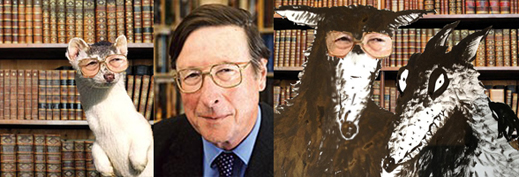
Sir Max Hastings, author of a new book claiming to be the first to compare the secret intelligence performances of the British, Americans, Germans, Japanese and Russians in World War II, has posted a picture of himself on the dust-jacket as a weasel.

“The best single volume written on the subject” is the blurb on the dust-jacket as the opinion of the Sunday Times, whose proprietor Rupert Murdoch, is also Hastings’s paymaster as owner of the book’s publisher, William Collins. Everything about the history of Russian spying offends Hastings almost as much as everything Russian offends Murdoch. This isn’t so much a history as it’s a textbook in info-warfare – and the antithesis of the conclusion Hastings suggests we should all come to. This is that in war force wins, not words – and that secret intelligence and propaganda are largely a waste of money and lives. “Allied intelligence contributed almost nothing to winning the war, ”Hastings quotes an American friend and expert, demurring that “this seems too extreme a verdict”, while adding his own: “official secrecy does more to protect intelligence agencies from domestic accountability for their own follies.” The exception proving both rules, according to Hastings, is the record of British intelligence compared to German, and to Russian.

Deception, that’s another story – unless The Secret War is an example of how Hastings has fooled himself. On this score, Hastings’s 612 pages are an unprecedented achievement in decoding his own text, and warning his readers off it. Murdoch and his media have been duped by Hastings out of the truth, though not out of the profit.
(more…)

- Print This Post Print This Post

dwb_1768_отредактировано-1

By John Helmer, Moscow

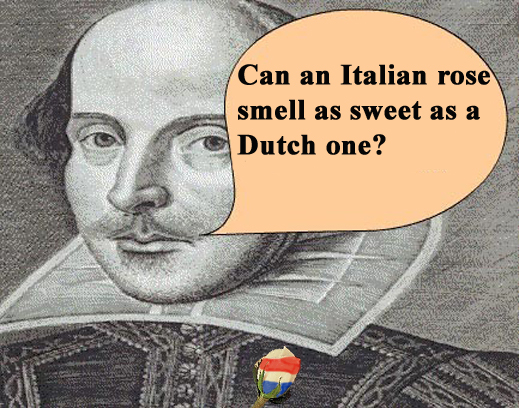
The conflict between Romeo’s Montagues and Juliet’s Capulets went deeper than the scent or the name of flowers, and we know it ended badly for the two of them. That’s to say with white lilies, not roses.

In the Russian market for cut flowers – until recently, the fastest growing in Europe — the war has cut imports by a third in value last year, compared to 2014. The deepest cut of all for exporters was suffered by The Netherlands, whose government has been outspoken in support of European Union sanctions; NATO military movements towards the Russian frontier; and support of the Kiev regime in the investigation of the Malaysian Airlines MH17 disaster.

But wait! is that a Montague and a Capulet bloom, an Italian rose, which has appeared on the Russian market in recent months? Yes, in the December quarter of 2015 the Italians jumped to fourth place in the table of top-5 exporters of cut flowers to Russia with shipments of 66 tonnes, at a value totalling $563,200. They replaced the Dutch. In the comparable quarter of 2014, The Netherlands had ranked number-4 with 560 tonnes worth $4.8 million; at the same time Italy delivered almost no flowers at all to Russia. The explanation, according to Moscow market sources, is that the Italian growers have found a way to avoid the Dutch flower auctions, and ship directly to Moscow.

The aggregate numbers speak for themselves with another meaning. In 2015 the total value of Russian imports of flowers from the top-5 sources came to $215 million. That was a 31% reduction compared to 2014. Imports over the full year from The Netherlands fell by 65% — from $29.7 million to $10.4 million.
(more…)