-  Print This Post
By John Helmer, Moscow
It’s more serious than a case of when the cat’s away, the mice will play.
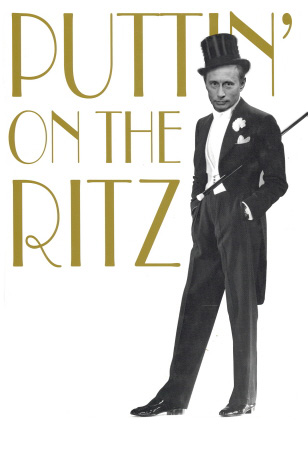
Arguments over Igor Sechin’s appointment to run the country delayed the announcement of Dmitry Medvedev’s government for several weeks in May. Now that Sechin’s at Rosneft in charge of constructing the most powerful energy-producing and trading platform in the world, he hasn’t had the time to supervise the Russian mining and minerals sector, as he used to do during President Putin’s second term and his prime ministry. In allocating Sechin’s time cost-effectively, there’s no comparison between running Rosneft and sorting out the problems of Norilsk Nickel, Rusal, Urals Mining and Metals, and Metalloinvest.
(more…)
by John Helmer - Tuesday, November 6th, 2012
No Comments »
- Print This Post
By John Helmer, Moscow
It happened at the same time in February, when the British Broadcasting Corporation (BBC) was rehearsing members of the Pussy Riot group, recording voice-over of a script against then presidential candidate Vladimir Putin , and fabricating a performance in Christ the Saviour Cathedral for which two members of the group are serving 2-year prison terms, and one is on probation. The BBC has acknowledged “errors” were made by their Moscow correspondent Steven Rosenberg in his compilations and broadcasts about the incident, the prequels and sequels.
This YouTube version of the February 21 incident has recorded 75,110 views. The BBC rehearsal version, posted on February 20, has so far drawn 84,336 views. An extra English-language version has recorded just 3,132 views. And this is the YouTube clip posted by Pussy Riot itself. The views total 2,364,707.
(more…)
by John Helmer - Tuesday, November 6th, 2012
No Comments »
- Print This Post

By John Helmer, Moscow
If Russia’s leading oil trader Gunvor can lose its allocations of crude oil from Rosneft and Surgutneftegas in a flash, and Novatek almost a third of its domestic gas sales in another instant, then Gennady Timchenko, a control shareholder of both companies, has some explaining to do in public. That is, if he intends investors on the London Stock Exchange (LSE) to buy shares in another company he controls in the Russian oil and gas business, IG Seismic Services (IGSS).
The answer to that question also helps answer the last question Timchenko was reluctant to answer – is he running away from trouble in Geneva, or running towards trouble in Moscow? Or both?
(more…)
by John Helmer - Friday, November 2nd, 2012
No Comments »
- Print This Post
By John Helmer, Moscow
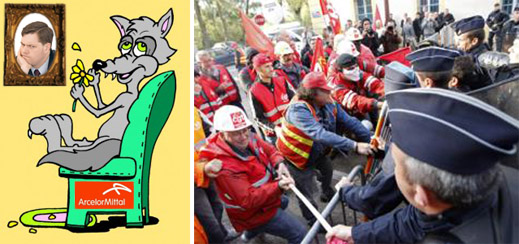
Severstal reconfirmed this week that the control shareholder and executive chairman, Alexei Mordashov, has ruled out buying brownfield projects or loss-making steelmills. The company is not saying, however, whether it will agree to buy from ArcelorMittal parts of the Florange steelmill in northeastern France. Two blast furnaces at the struggling site have been shut down for the past fourteen months, but operations have continued at the downstream hot and cold rolling mills and coating lines, as well as at the upstream coke plant. Full capacity production at Lorange is 2.5 million tonnes per annum.
On October 1, ArcelorMittal announced it intended “to permanently close the liquid phase [blast furnace production of steel at Lorange] and concentrate efforts and investment on the high-quality finishing operation, which employs more than 2,000 employees.” It claimed that 629 jobs would be lost in total. This triggered local demonstrations. ArcelorMittal is also claiming that it will continue to operate part of the Florange complex. “The company is proposing that in the future, slab for the Florange site will continue to be transported from Dunkerque, a world class site, thereby maintaining the industrial chain in France. ArcelorMittal will then focus on enhancing Florange’s position as a centre of excellence for developing high-quality value-added products for its customers, most notably in the automotive industry.”
(more…)
by John Helmer - Friday, November 2nd, 2012
No Comments »
- Print This Post
By John Helmer, Moscow
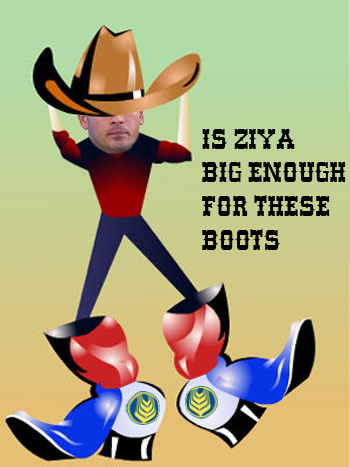
When he was last spotted at his own devices, Ziyavudin Magomedov announced on September 20 that some time in the next decade he and Gazprom intend to build a refinery to convert natural gas into liquefied natural gas (LNG) in bunker form to power a Magomedov fleet of newly designed, newly launched ocean-going ships. Magomedov’s current fleet comprises mostly tugboats with antique power plants, employed for tanker escort at Novorossiysk and Primorsk ports; he has declined to explain where the new fleet would come from, or why. So the announcement appeared to be no more than an advertisement that, in the current scramble for state budget and state bank funds, Magomedov has a powerful ally.
He has now followed with a placement in Bloomberg that he is thinking of making a bid to buy Australia’s GrainCorp, and must beat the takeover bid already on the table from Archer Daniels Midland (ADM) for A$2.77 billion (US$2.88 billion).
(more…)
by John Helmer - Wednesday, October 31st, 2012
No Comments »
- Print This Post
By John Helmer, Moscow
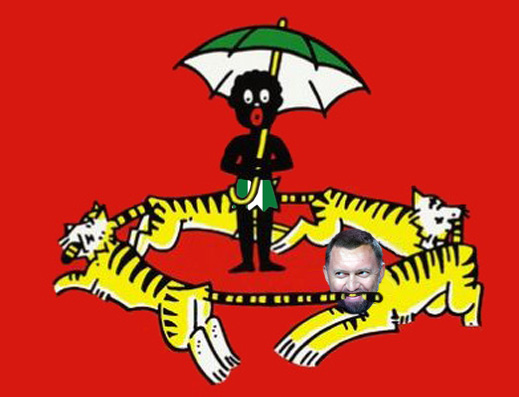
In the century-old story of the little boy and the four tigers, the latter force the lad to give up his clothes with threats to eat him, if he doesn’t come across. Then in a frenzy of envy and greed, the tigers chase each other until they turn to butter. Unscathed, the boy takes back his clothes, and his mother turns the tiger butter into pancakes.
In a turn-up for the books, after eight years of litigation in the US and Nigerian courts, pancakes is what the Nigerian government is now making of United Company Rusal. Not ready to take this lying down, lawyers for Rusal have asked the courts of London and Los Angeles to rule again on just who is the tiger, and who the boy in this story.
(more…)
by John Helmer - Wednesday, October 31st, 2012
No Comments »
- Print This Post

By John Helmer, Moscow
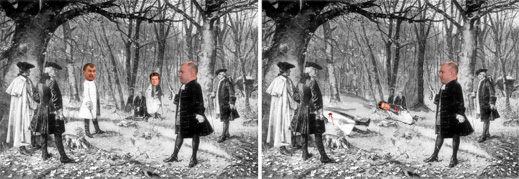
In the good old days, when Rusal, Russia’s aluminium monopoly, was taking in great volumes of cash and Oleg Deripaska, the controlling shareholder, had his associates emptying it for other business as fast as they could, Deripaska operated a fleet of aircraft, large and small. That the biggest of the fleet, a 5-year old Boeing 337, is now in the catalogue of an aircraft broker for sale, indicates how diminished the company’s fortunes have become, and how little Deripaska himself controls what remains of the cashflow. In the mock-up, that is Deripaska inside the lounge of the aircraft, sitting next to his new creditor, Iskander Makhmudov.
(more…)
by John Helmer - Sunday, October 28th, 2012
No Comments »
- Print This Post
By John Helmer, Moscow
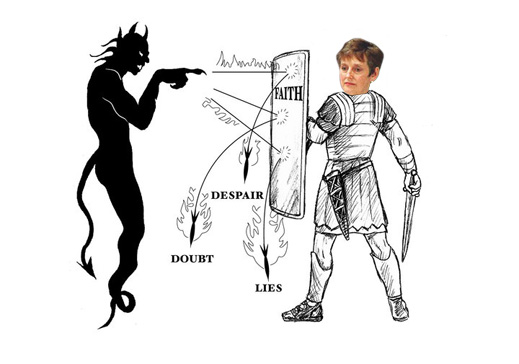
Spy novels are a dime a dozen – make that £10 before they are remaindered; the fact that some of them are written by ex-spies or counter-espionage agents doesn’t make them more precious for their veracity or insight. What makes Stella Rimington (right) a cut above (or below) is what she reveals to be her understanding of her enemy’s character, purpose, modus operandi, and pathology, as inculcated in Rimington during her 27-year career as an MI5 officer. In that time she was promoted successfully through every branch (counter-espionage, counter-subversion, counter-terrorism) until she spent her last five years as Director-General. Since then Rimington has been writing fictional thrillers. The last of these, The Geneva Trap, published a few weeks ago, is about several agents of the Russian Foreign Intelligence Service (SVR). It’s what Rimington understands of them that makes the read worthwhile: not for what it reveals about such Russians, but what it reveals about the MI5 mind-set.
(more…)
by John Helmer - Saturday, October 27th, 2012
No Comments »
- Print This Post
By John Helmer, Moscow
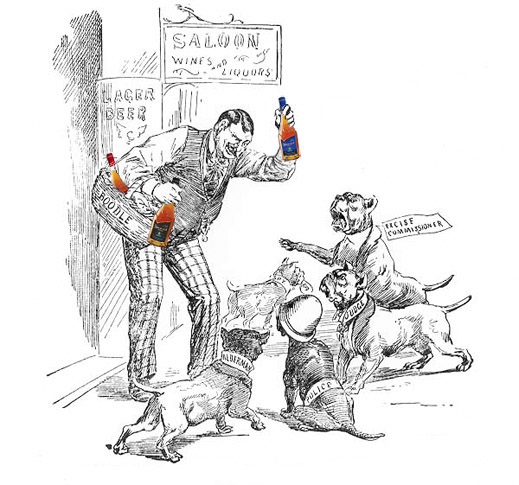
Russian consumption of wine, beer and vodka declined during the last economic crisis in 2008 and 2009, and the early signs are that this is happening again. But cognac is in a very special category. All the alcoholic drinks, but one, respond to the availability of money in Russian consumers’ hands. When the supply of money dries up, and consumers are thirsty, they opt for moonshine. But even that obeys the laws of money supply and demand. Cognac, however, is a type of currency itself. The volume of cognac sales goes up when the value of bribes is rising.
Last week, the government regulator RosAlkogolRegulirovanie (RAR) announced that it has decided to raise the minimum price in retail of a bottle of domestic brand champagne (0.75l) to Rb115 ($3.71). The move, which follows an earlier one in 2010 to raise the minimum retail price of vodka to Rb125 (for 0.5l), has been requested by the sparkling wine producers association. The objective is to make it easier for the regulators to stop the sale of illegally produced champagne which is averaging Rb99 a bottle. At that price, it currently commands about 40% of the market. When the vodka minimum was raised, the effect, according to the experts, was to drive about one bottle in five of moonshine vodka off the market. A plan to do the same for still wine is under consideration at RAR at present.
(more…)
by John Helmer - Wednesday, October 24th, 2012
No Comments »
- Print This Post
By John Helmer, Moscow
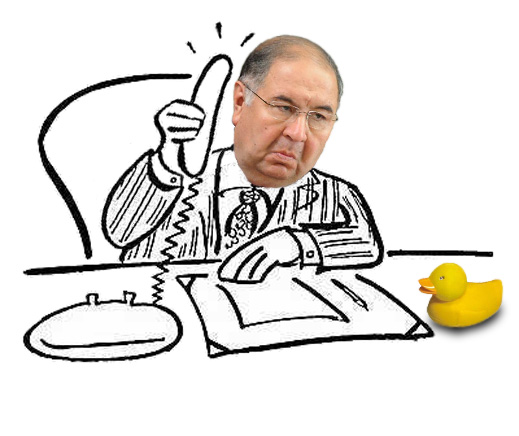
When it comes to interior decoration, no one does gilding better than Alisher Usmanov. And when it comes to serving delicacies to journalists, none cooks up the hors d’oeuvres better than he does. In the international stock markets, however, these qualities don’t quite cut the mustard. In consequence, in London this week Usmanov has set the Russian record for the number of attempts at initial public offerings (IPOs) or strategic share sales which have failed for buyers or price, or which he has withdrawn for related, if undisclosed reasons.
In between February and October 2008, there were at least two direct IPO tries for Usmanov’s Metalloinvest holding of iron-ore mines and steelmills, and one reverse listing attempt with Kazakhmys. In 2010 there was an attempt at selling a stake to Mitsui, and then a reverse listing negotiation with Nathaniel Rothschild’s ill-fated Vallar; both misfired. Between 2010 and 2011 another London Stock Exchange (LSE) bid was tried. Add to this reckoning the 2003-2004 negotiation with the Anglo-Dutch steelmaker Corus; abortive schemes to add Ukrainian and Kazakh iron-ore assets to his Mikhailovsky and Lebedinsky mines; and a national metals champion plan to merge with Norilsk Nickel and Rusal in 2009.
(more…)
by John Helmer - Tuesday, October 23rd, 2012
No Comments »