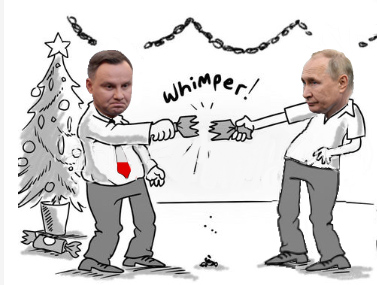
Russia’s warning to Poland not to send troops into the western Galician region of the Ukraine has fallen on deaf ears in Warsaw. Instead, electioneering ahead of an October national parliamentary vote has dictated different priorities for the governing party, the main opposition party, and the rising Konfederacja (“Confederation”) party.
No major politician in the country has commented. The government downplayed by summoning the Russian ambassador to the Foreign Ministry in Warsaw on Saturday to be told that Poland “strongly condemn[s] the threats and unjustified questioning of [Poland’s] borders.”
Speaking from Washington, Radoslaw Sikorski, now a Polish member of the European Parliament under financial investigation, said Putin “is clearly up to something. He’s provoking Poland. Wagner’s mercenaries are in Belarus… He’s clearly preparing some kind of provocation, probably to draw Belarus into the war. I don’t expect him to attack NATO [Poland] because clearly Russia would lose… Let me be absolutely clear. Poland has zero territorial designs on anybody. This is just looking for some kind of provocation. Mr Putin’s war is not doing well. Umm, yee, perhaps he’s trying to scare us into, errr, us self-deterring so to speak.”
To capture or hold the votes of Poles already concerned at the impact on the country of unrestricted Ukrainian and muslim refugees, and the losses to farmers of dumping of Ukrainian grain exports, Putin’s warning is not triggering public debate, or exposing significant differences between the government and the opposition parties.
Independent Polish political analyst Stanislas Balcerac comments “there’s not much coverage, Poland is more concerned about Wagner in Belarus. There are other topics – the election campaign, toxic waste fire in Zielona Gora. Confederation may be stealing some of the younger voters from the PiS [Law and Justice, the government party], but it is unclear how the PiS wants to deal with it between now and the election date.”
Soldiers lay down smoke on the battlefield to conceal their movements, advancing or retreating, from the troops on the other side.
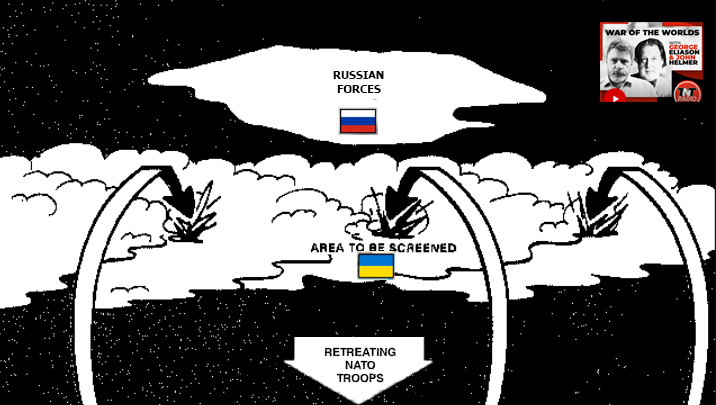
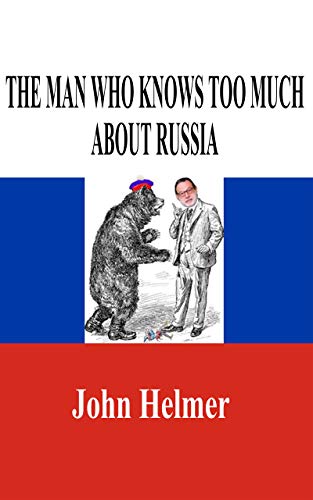
In the US Army manuals for warfighting with smoke, there are four kinds for the battlefield (lead image) – obscuring smoke which is aimed at blinding the enemy so he can’t see what you have coming for him; screening smoke which is laid down between you and your enemy, so he can’t see what you are doing in your positions; protecting smoke which is aimed at disrupting the laser and other targeting systems of the other side’s artillery and rockets; and marking smoke whose purpose is either to pinpoint targets for air attackers or rear artillery, or identify safety positions on a rapid-movement battlefield.
With the White House in the lead, in the war the NATO allies are fighting against Russia to the last Ukrainian, an entirely new kind of smoke has been used – it’s the blowback smoke which blinds its users. On the Ukrainian battlefield this smokescreen conceals nothing from the Russians. Instead, it is being used to deceive the NATO country media, voters, and parliaments which must agree to subscribe the money to pay the Ukrainians to fight, and supply them with NATO ammunition, weapons, intelligence, and support services, including credits and cash. Vladimir Zelensky, the Ukrainian president best known for career comic turns — the most famous of which was playing a piano with his penis (screened, protected, marked) — is the master of the blowback smoke on the present battlefield.
A day ago, he told the Ukrainian deputy prime minister of Canada, Chrystia Freeland: “we are approaching a moment when relevant actions can gain pace because we are already going through some mines locations and we are demining these areas.” The calculated ambiguities – “moment”, “approaching”, “relevant”, “can”, “pace”, “some” – are the smoke. The blowback was started by Freeland who told Zelensky that how his counteroffensive was going against the Russians is “the question in the minds of everyone here [and] the preoccupation of all of your friends in the world”. Zelensky’s smoke was invited by Freeland to blind the world, especially their friends.
In this week’s War of the Worlds discussion with Swiss Army Colonel Jacques Baud, this tactic is exposed, and in its place evidence revealed of the French and other allied general staffs trying to find their way off the battlefield, as Zelensky forces are destroyed, along with the best of US, French, British and other NATO weapons. The programme was pre-recorded on Thursday.
Less than twenty-four hours later at a virtual session of the Russian Security Council, President Vladimir Putin made an unusual introduction to the closed-door plans of his military, security and intelligence chiefs. “It is clear today,” Putin said, referring to the Americans, French, Germans, and British, “that the Western curators of the Kiev regime are certainly disappointed with the results of the counteroffensive that the current Ukrainian authorities announced in previous months. There are no results, at least for now.”
“The whole world sees that the vaunted Western, supposedly invulnerable, military equipment is on fire, and is often even inferior to some of the Soviet-made weapons in terms of its tactical and technical characteristics.”
Then on the topic of Poland and Galicia, Putin makes the most important statement by a Russian leader in more than a hundred years. Putin warns the Polish government, together with the Lithuanians, not to make a troop move on Galicia’s capital Lvov, as the Germans had done in 1941. He also warns Berlin not to imagine they can recover the old Prussian or the more recent Third Reich sway in those territories.
Between the lines also, Putin issued an invitation to two of the ruling factions in Kiev – the military command and the Lvov Banderites – that they should remove Zelensky quickly, before they lose what will be left of their territory, after the Russian Army goes on the offensive. If they want to keep Galicia, “this, I repeat”, Putin said, “is in the end their business. If they want to relinquish or sell off something in order to pay their bosses, as traitors usually do, that’s their business. We will not interfere in this.”
Putin’s smoke signal carried a subliminal meaning. He didn’t identify the Biden administration. Instead, he implied that Zelensky is the Americans’ underboss; and that if the Ukrainians want to survive the war in which everything made in America is “on fire”, the Ukrainians don’t have long.
Officially speaking, the Russians ended the year-long Black Sea Grain Initiative by refusing to renew it on July 17.
Practically, it has been doomed for weeks. The Ukrainian attacks on the Togliatti-Odessa ammonia pipeline (June 8) and the Taman ship-loading terminal (June 2); Ukrainian efforts to use the grain carriers in the United Nations-supervised sea corridor to conceal imports of weapons and the launch of naval drones aimed at the Crimean Bridge, Russian Black Sea fleet vessels, and other shore targets; the refusal of the NATO states to lift their sanctions against the Russian trade to implement the terms of the original UN agreement — at the same time as they are stopping Ukrainian exports from entering the European Union (EU) at dumping prices – this is what killed the deal.
That it had benefitted the Ukraine and the EU states more than it benefited Russia has not been an obstacle to Russian renewal of the terms until now, but too embarrassing for the EU states to admit, and their media to report.
President Vladimir Zelensky’s spokesman said the Russians are now attempting “to destroy the ability to supply food to the countries of the global south”. This line of Russia at war with the world was picked up by Josep Borrell, the EU’s foreign minister: “If this grain is not only stopped but [also] destroyed . . . this is going to create a huge food crisis in the world…The ministers will have to discuss how to proceed, but there is only one solution: to increase the military support to Ukraine. If they are being bombed, we have to provide anti-aerial capacities.” “Hundreds of thousands of people, not to say millions, urgently need the grain from Ukraine,” echoed the German Foreign Minister, Annalena Baerbock, “which is why we are working with all our international partners so that the grain in Ukraine does not rot in silos in the next few weeks, but reaches the people of the world who urgently need it.”
The UN Secretary-General Antonio Guterres repeated that Russia’s war in the Ukraine was a war against food supplies, low wheat prices, and survival from starvation worldwide. “Today’s decision by the Russian Federation will strike a blow to people in need everywhere.” “Struggling people everywhere and developing countries don’t have a choice. Hundreds of millions of people face hunger and consumers are confronting a global cost-of-living crisis. They will pay the price.”
White House officials claimed the Russians are weaponizing food. “Russia’s decision to resume its effective blockade of Ukrainian ports and prevent this grain from getting to markets will harm people all over the world,” National Security Council spokesperson John Kirby said at a White House briefing.
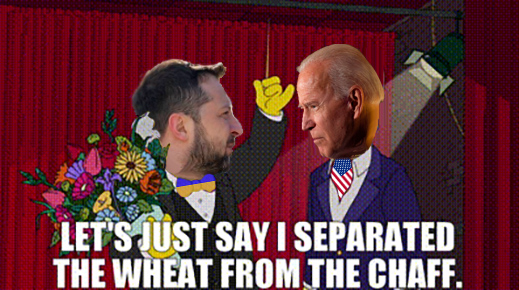
These claims aren’t true. They are “clashes with shippers’ reality”, a Bloomberg report acknowledged. Like almost every scheme the corruptly clever Zelensky (lead image, left) and the corruptly stupid Joseph Biden (right) have devised in the current war, the conversion of the fight for Odessa and Ukraine’s other Black Sea ports into a war to starve the hungriest peoples of the world is failing.
Instead, the battle for Odessa has begun where the electric war to turn off the city’s lights left off. The end of the Black Sea grain initiative will profit the Russian grain and fertilizer exporters by a big margin, compared to the past year; the neediest country importers will gain from direct Russian shipments at low to zero price; and the Ukraine will lose, not only its remaining ports and their trading and shipping infrastructure, but also its sea lanes southward.
At the same time, Ukraine’s neighbours in the European Union (EU) are closing the river lanes, roads, and rail lines to Ukrainian grain exports northward and westward. That’s weaponizing food – but the Europeans are doing it to protect their own farmers.
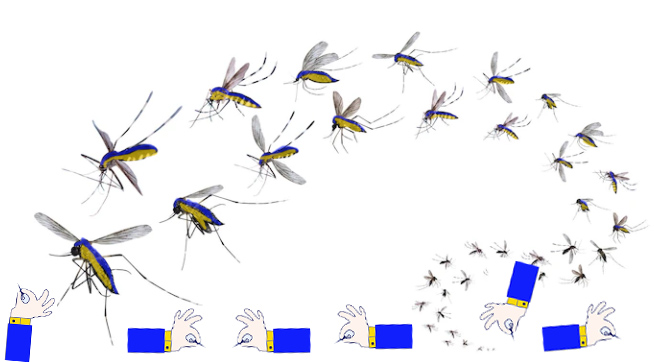
On the battlefield the Ukraine has pioneered the Mosquito Tactic – that’s sending units of dozens of soldiers running towards Russian defence fortifications in several swarms at the same time, across a half-dozen salients up and down the line of contact. In parallel, in the air and on the sea President Vladimir Zelensky and his general staff have devised the Bloody Pinprick Tactic – that’s drones exploding on Russian targets like the Crimean Bridge or the Kremlin Senate Dome.
The purpose of both, mosquitoes and pinpricks, is warmaking as public relations, Zelensky is advertising the illusion that the Ukrainian army can win its offensive against Russia, no matter how great the loss in Ukrainian men and materiel; notwithstanding how little the impact on Russian forces.
The real target of this bloody PR isn’t the Russians. It is Zelensky’s NATO allies and paymasters who secretly warned him during the July 11-12 NATO summit meeting that the cashflow and the enthusiasm are already running down, and may be cut by Christmas. The tactic of bloody PR means making daily defeat look like imminent victory, with conditions: NATO fighter-bombers pretending to be Ukrainian; Polish troops around Lvov pretending to be the revival of the Polish-Lithuanian union of 1386; and grain carriers as warships on the Black Sea, pretending to feed the hungriest populations of the world.
In war, the losing side has several options. Fighting to the death is one of them, capitulation and surrender are another. Depending on their rank, religion, honour, and offshore bank accounts, the losers may run away or commit suicide.
The Ukrainian regime, with the assistance of the North Atlantic Treaty (NATO) states and President Joseph Biden, have come up with an entirely new ploy. This is to escalate the combat, sacrificing all their troops and their equipment, and pretend this is winning — before they do a runner. Not even Adolf Hitler and his propaganda minister Joseph Goebbels, in their last days in the Berlin bunker, thought of this. But then Miami, Malibu, or the Côte d’Azur weren’t haven options for them.
At the current attrition rate on the front line, the Ukrainian army will have lost another one hundred thousand men dead and about three hundred thousand wounded by Christmas; their reserves will have been committed to the fight and exhausted; the army will have neither resupplies of ammunition nor replacement NATO artillery and other equipment to fight on. In desperation, if a final fight to the death is their option, President Vladimir Zelensky and the Ukrainian general staff demand F-16 fighter-bomber aircraft. This means escalation to the use of tactical B-61 nuclear bombs. These can be stored in Germany, Czech Republic, Poland or Romania, and loaded on F-16 aircraft there.
Russian Foreign Minister Sergei Lavrov responded directly on July 12: “We have informed the nuclear powers — the United States, Great Britain and France – that Russia cannot ignore the ability of these aircraft to carry nuclear weapons. No assurances will help here. During the fighting, our military will not understand whether each specific aircraft of the specified type is equipped for the delivery of nuclear weapons or not. The very fact of the appearance of such systems in the Armed Forces of Ukraine will be considered by us as a threat from the West in the nuclear sphere.”
Lavrov warned this may mean Russian nuclear pre-emption against either an attacking weapon, its launch pad, or its storage bunker.
“The conditions for Russia’s use of nuclear weapons”, Lavrov said, “are clearly defined in our Military Doctrine. They are well known, and I will not repeat them again. The use of nuclear weapons can be considered as a response option under one of four possible conditions. These include: ‘aggression with the use of weapons of mass destruction against Russia itself or its allies’, ‘aggression with the help of conventional armed forces that threatens the very existence of the state’, obtaining reliable information about the massive launch of ballistic missiles towards Russia and ‘the enemy’s impact on critically important state or military facilities of the Russian Federation, the failure of which will lead to the disruption of the response of the nuclear forces.’”
“Such threats to the Russian Federation in connection with the conflict in Ukraine are not currently being viewed [as likely], Russian officials have repeatedly stated. At the same time, Russian President Vladimir Putin has stressed that the use of nuclear weapons is theoretically possible: ‘Nuclear weapons are being created in order to ensure our security in the broadest sense of the word and the existence of the Russian state. But we, firstly, do not have such a need. Secondly, the very fact of reasoning on this topic already lowers the possibility of lowering the threshold for the use of weapons. At the same time, Vladimir Putin noted that he has a negative attitude to the idea of using tactical nuclear weapons as an element of nuclear deterrence.”
These are the stakes. They have been well-known since Russia offered the US and NATO a non-aggression treaty in December 2021, two months before the special military operation began on February 2022.
What is new now is that the Ukraine, the US and NATO are losing their war against Russia on the battlefield, and risk losing all the deterrence which NATO has been designing, building, buying, and deploying since 1949. With or without desperation measures, Swiss colonel Jacques Baud tells War of the Worlds, Russia has already won the war. “Colonel Douglas Macgregor hasn’t this courage,” a US NATO veteran comments, referring to the Trump Administration appointee now broadcasting against the Biden Administration.
For all its public talk, NATO has agreed on a secret six-month plan for Ukraine. It’s a case of do or die by December.
Either the Ukrainian forces, firing everything the NATO allies can give them — from US cluster munitions to Franco-English Storm Shadow missiles and German Leopard tanks — will gain territory and advantage over the Russians; or else the Kiev regime will be destroyed and must fall back on Lvov while NATO beats its own retreat westward from the Polish and Romanian borders — its military capabilities defeated but its Article Five intact.
This is hardly a secret. “Whatever is achieved by the end of this year will be the baseline for negotiation”, the Czech President Petr Pavel, former Czech and NATO army general, announced on the first day of the summit meetings in Vilnius. There is no more than a six-month window of opportunity, Pavel added, which will “more or less close by the end of this year”. After that, “we will see another decline of willingness to massively support Ukraine with more weapons.”
The difference between the Czech’s “more or less” was explained to Ukrainian President Vladimir Zelensky by Henry Kissinger on the telephone. But the telephone was rigged, and Kissinger was talking instead to the Stavka in Moscow, in the guise of the pranksters Vovan and Lexus.
After justifying himself at length for initially opposing NATO membership of the Ukraine, and then mispronouncing the word “anomalous”, Kissinger acknowledged there is a problem for the Biden Administration to combat European government opposition to NATO membership for the Ukraine. The Ukrainians must fight against that, too, he implied. So long as the US is backing Zelensky, it is necessary for the Ukrainian offensive to demonstrate small territorial advantages; abandon more ambitious ones (like Crimea); and only then agree to ceasefire talks. Although Kissinger told Zelensky he had been speaking with US “military people”, he gave no hint that they had warned him the Ukrainians are facing defeat on the battlefield, and the loss of both territory and European support.
The Russian General Staff calculation is different.
At the current rate of battlefield casualties – announced by the Defense Ministry counting conservatively — by December 31 the Ukrainian army will lose between 75,000 and 100,000 dead, and up to 300,000 wounded and out of combat. In parallel, the destruction of NATO weapons will accelerate faster than the NATO states can resupply and deliver them, or replacement parts to keep the surviving stock going at the front. By the time Russia’s General Winter takes control of the battlefield, there will be too few Ukrainian fighting men left, and insufficient weapons and ammunition, to resist the start of the Russian offensive. A demilitarized zone of mines and cluster bomblets will have taken shape over several hundred kilometres west of the surrendering Odessa, Nikolaev, and Kharkov; they will abandon Kiev when Kiev abandons them.
The Russian target then will be to drive what remains of the Ukrainian regime, its flags, tattoos, money, and stay-behind terrorism plans, into an enclave around Lvov. The NATO window, as General Pavel called it, will have been opened, but then will be closed to keep NATO itself from catching cold.
One of the unreported outcomes of the Wagner mutiny, and of the June 29 meeting in Moscow between President Vladimir Putin and Yevgeny Prigozhin, is Putin’s commitment to fight for nothing short of the Ukraine’s rout to Lvov, and the NATO retreat westward in the footsteps of the Grande Armée and the Wehrmacht. This too is incomprehensible at NATO headquarters.
Today it’s a little funny to see the bewilderment from reports of Putin’s meeting with Prigozhin, because, they say, Putin had called Prigozhin a rebel, and then meets with him.
In the current war with the US, the monetary policy of the Central Bank of Russia and of its governor, Elvira Nabiullina (lead image, right), has been criticized in the State Duma and in the domestic media for catastrophic negligence in exposing the Bank’s currency reserves to the US freeze and seizure, which occurred on February 28, 2022.
The US Treasury described its action as a freeze. “This action effectively immobilizes any assets of the Central Bank of the Russian Federation held in the United States or by U.S. persons, wherever located…The United States has not taken this action alone. On February 26, 2022, partners and allies committed to imposing restrictive measures that will prevent the Central Bank of the Russian Federation from deploying its international reserves in ways that would undermine the impact of United States sanctions and the European Union followed up with their restrictions last night. Our actions demonstrate global support for Ukraine and the commitment to hold Russia’s threatening, authoritarian rulers responsible for their heinous actions.”
This was easier said than done. Finding the money in order to prevent the Russians getting their hands on it has proved unexpectedly difficult, especially in Europe.
War between states, even the exceptionalist ones against the heinous ones, can be unpredictable like that. The medium-term impact of the US action has been a multi-billion dollar outflow of US reserves by other states like China and Saudi Arabia, and a rise in the US Treasury’s costs of debt service, which will continue to grow with time.
This was not Nabiullina’s intention in failing to shield the reserves and impose capital outflow controls when she had the time and warning to do so. Instead, she has made plain she is not a warfighter. Less plainly, Nabiullina allowed “four people with knowledge of the discussions” to tell Bloomberg she had offered her resignation to the Kremlin in her opposition to the war. Officially, all she would say in a March 2, 2022, pre-recorded video message to her Central Bank staff was “all of us would have wanted for this not to happen.”
More garrulous lower-level CBR staff told Bloomberg they were feeling “a state of hopelessness in the weeks since the invasion, feeling trapped in an institution that they fear will have little use for their market-oriented skills and experience as Russia is cut off from the world.” By skills and experience, they meant the endorsements they have craved – and Nabiullina has received – from the International Monetary Fund (IMF), the US system banks and funds, the World Economic Forum, and the Russian politicians who have promoted them and Nabiullina, Anatoly Chubais and Alexei Kudrin. This is a long story; follow the archive here.
The lobbying against Nabiullina from the warfighting side, from the left economic policy side, and from the oligarchs who demanded low CBR interest rates all failed; and on March 18, 2022, President Vladimir Putin nominated Nabiullina to a third five-year term. The State Duma confirmed the nomination on April 21, 2022.
After the political failure of the campaign against her, wartime secrecy requirements have restricted the evidence of the Kremlin orders Nabiullina has been following, especially on the implementation of the capital controls which the Kremlin authorized at the same time as her reappointment. The reported capital outflow in January 2023 appears to be significantly lower than its postwar peak in July 2022, but higher than its prewar levels in January 2020 and July 2021.
The oligarch loophole for capital export was opened by the June 9, 2022, presidential decree creating a secret Control Commission. The Central Bank official in charge of the commission’s business, Yury Isaev, resigned after less than eight weeks in the job.
Isaev’s exit exposed the gap — black hole more like — between what Nabiullina and other government officials say and what they do, and who gains in the process. As the Prigozhin affair demonstrates, wartime secrecy not only protects Russia’s warfighting capacities, but also conceals many Russian incapacities, so speak.
In the report to follow, just published by Vzglyad, the leading Moscow platform for national security analysis, Nabiullina’s management of the rouble exchange rate is examined, the target of the current devaluation forecast, and the gainers and losers identified.
There’s no American anti-war movement in the Vietnam War, Syrian War or Afghan War sense of the term. That’s because there is a genuine US strategic interest at stake in fighting Russia to the last Ukrainian, and further. No comparable strategic stake existed in the earlier wars.
The stake in the war against Russia is the preservation of the US occupation of Germany and the empire in Europe and the UK, together with the credibility of US weapons which must be sold worldwide at prices to match their reputations in combat. Losing the war on the Ukrainian battlefield and in the sanctions war against Russia means a worldwide defeat for the US, its military power, its commercial and financial dominance, along with its command-and-control systems, subsidiaries, and retainers.
The substitute for an anti-war movement in Washington is faction-fighting over what means, what terms can be devised to get the US out of the Ukraine before the Ukrainian army capitulates, Vladimir Zelensky flees for his life and fortune, and with them the collapse of the US alliance called NATO.
The apprehension of the allies in Europe was revealed a few days ago when Jacques Attali answered a telephone call he thought was from former Ukrainian president Petro Poroshenko, but which came instead from the Russian pranksters Vovan and Lexus. Attali, French presidential adviser, US retainer, and ex-head of the European Bank for Reconstruction and Development, said he knew French President Emmanuel Macron well and that Macron was afraid the US would abandon the Ukrainians to save itself. There was the same fear among the Germans and British, Attali added. “The weak point is what happens in Washington.”
“[This is] a nightmare scenario. That would be the US saying, well, enough is enough. We are not going to help Ukraine more. You have to go to negotiations, to the negotiating table. And that’s it. … Neither France, Germany or the UK can do that. But the US could arm-twist your [Poroshenko’s] government and your country [Ukraine] to say we want a ceasefire whatever it costs and stop [the war]. The most important thing is to avoid that.”
“There is no other way than a total win and to get rid of Putin…We have to take all risks for that. No compromise is possible, no compromise.”
This is the European allies’ last stand, their backs to the wall at the Dnieper River. It is the rationale for desperate measures on the battlefield, and at the NATO summit on July 11.
The calls have begun in Moscow, starting among the war blogs and battlefield reporters, for keeping intact Yevgeny Prigozhin’s conglomerate of military budget contractors. The reason argued is that they have established themselves so strategically in the logistics of the military services that they cannot be purged without doing greater damage than Prigozhin himself has caused.
In short, a Russian oligarch who knows too much, with too many mouths to feed, too many pockets to fill, and so too big to fail.
“There may be some reorganizations and a formal change of leadership,” Boris Rozhin, author of the Colonel Cassad media, has announced. “The reason for the preservation is simple. Over many years of work, Prigozhin’s structures have grown so deeply into the state fabric that cutting them out at the same time without serious damage to the state is fraught with serious problems. That is, you can cut it out, but the consequences will be serious.”
The war reporters are not the source of the first estimates from the Defence Ministry indicating the trillion-rouble, multi-billion dollar size of Prigozhin’s empire, and the scale of the personal fortunes he, his close associates, and state officials have been accumulating for at least a decade. No military analyst contacted for comment on the figures, will respond.
In the organized Russian political opposition, only the communist parties think differently and say so in public. Since the beginning of the special military operation they have publicly repudiated the pro-NATO line of the communist parties in Europe.
The non-communist opposition in Moscow, led by Mikhail Delyagin in parliament and Sergei Glazyiev in government, has been vocal in their criticism of the Central Bank governor, Elvira Nabiullina; on Prigozhin they remain silent, refusing to answer questions.
Leading the open challenge to the Kremlin and the Defense Ministry is the Russian Communist Workers Party (RKRP in Russian, CWP in English), a breakaway from the Russian Communist Party (KPRF); with 57 deputies and 20% of the national vote, the KPRF is the leading opposition bloc in the State Duma; the CWP draws about 2% of the vote and has no parliamentary voice. At the start of the special military operation in February of last year, the CWP gave qualified support, but made that conditional on what the goals of the operation would turn out to be.
“In our analysis and conclusions in these specific historical conditions, we rely on the analysis already made in the course of the development of the situation, including at the conference with the communists of Donbass, Ukraine, Russia in November 2019 in Lugansk. Once again, returning to the fact of the recognition of the republics of Donbass, we note that it happened, although late, much later than it should have, but better late than never. The RKRP not only supported this step from the very beginning of the proclamation of these republics, but also demanded that the bourgeois authorities of the Russian Federation take this step as an aid in opposing the People’s republics of Donbass to fascist aggression by the Kiev Nazis.”
“The goal of the strongest US imperialism in the world is to weaken the Russian competitor and expand its influence in the European market space. For this purpose, they purposefully worked to pit against each other not only the authorities, but also the peoples of Russia and Ukraine…We have no doubt that the true goals of the Russian state in this war are quite imperialist — strengthening the positions of imperialist Russia in the global market competition. But, since this struggle today to some extent helps the people of Donbass to fight back against Bandera fascism, the communists do not object to this objective, but allow and support as much as it is being waged against fascism in Donbass and Ukraine… As long as Russia’s armed intervention helps to save people in Donbass from reprisals by the punishers, we will not resist this goal. In particular, we consider it permissible if, due to the circumstances, it becomes necessary to use force against the fascist Kiev regime, insofar as it will be in the interests of the working people…To die and kill for the interests of the masters is stupid, criminal and unacceptable.”
Last week the CWP issued its declaration of “We told you so”. About Prigozhin and the Kremlin, the party told its supporters, “there are no clean and honest people here and there cannot be.”
“These events showed that the bourgeois dictatorship has led the country to the decline, not only of the economy, but also of the army and state administration, which, by the way, was what Prigozhin was talking about and speculating on. It should be said that Prigozhin himself is also an oligarch with a criminal past, who made his billions in a non-transparent way. Now it turns out that Prigozhin was simply competing for a more lucrative place at the feeding trough against other oligarchs. And he himself has understood perfectly well that if he were to find himself in power, he would pursue the same policy. That’s because practically everything in the politics of the bourgeois state is determined only by economic interests, simply put – the interests of profit.”
The KPRF has also issued statements, including a long interview with the Communist Party leader-for-life, Gennady Zyuganov. He doesn’t endorse the line of attack of the CWP.
Follow the arguments presented by the two Russian communist parties as they debate in public the meaning of the Wagner mutiny and the evidence of Prigozhin’s decade-long state capture. Excerpts have been translated into English from the longer Russian statements which can be followed in their original published form.
The partisan jargon varies from country to country, language to language. But nothing comparable exists from the democratic opposition parties of North America or Europe.