


By John Helmer, Moscow
@bears_with
The men of the Russian military forces doing the fighting on the Ukraine front are defending far more unequally distributed Russian national income and asset wealth on the home front than the Red Army which fought and won the war against Germany and Japan, the Great Patriotic War of 1939-45.
Moreover, if expert estimates are correct, the men fighting World War I were defending the Romanov-regime tsarist nation whose measurable inequality was less – repeat less – than the Russian society of today. In 1917 that inequality triggered the Bolshevik Revolution.
“Our benchmark estimates,” reported Thomas Piketty and two other French academic economists, Filip Novokmet and Gabriel Zucman, in 2017, “suggest that inequality levels in Tsarist and post-Soviet Russia are roughly comparable. Very top income shares seem if anything somewhat larger in post-Soviet Russia.”
In conclusion, the Piketty report said: “The dramatic failure of Soviet communism and egalitarian ideology – in the form it was applied in Russia – seems to have led to relatively high tolerance for large inequality and concentration of private property (partly coming from outright plundering of the country’s natural resources and foreign reserves). In effect, extreme inequality seems acceptable in Russia, as long as billionaires and oligarchs appear to be loyal to the Russian state and perceived national interests. Whether this fragile equilibrium will persist in the coming years and decades remains to be seen.”
That was the equilibrium of 2017.
Today, almost a decade later, after four years of war on the battlefield and on the high seas, and of sanctions war against Russian private and state offshore assets, the money being spent by the state on the war effort has helped to reduce the cash inequality of Russia’s poorest regions and lowest-income population. This state budget process has been called Russian military Keynesianism.
“Massive redistribution of state income to industries [is] linked to the war effort on the one hand, and significant financial support for the hundreds of thousands of men at the front on the other. This military Keynesianism has transformed society at both the socioeconomic and cultural levels. It has partially rebalanced the wide disparities in wealth, levels of consumption, and social prestige in Russian society by granting substantial financial and symbolic advantages to peripheral Russia, which has long been overlooked by the central government.”
As President Vladimir Putin has emphatically, sometimes angrily, declared, this “Keynesianism” is not nationalization, not revolutionary, not permanent – as temporary and exceptional as the Special Military Operation.
Asked last week by a reporter if this “could lead to the nationalisation of these assets, turning them into state property”, Putin replied: “Of course not. What are you talking about? This is not a matter of nationalising anything – do not even think about it. There was never any such intention behind this move. Nationalisation is not an option.”
However, egalitarianism is an option in Russia’s domestic politics.
In that direction, a slow, unpredictable, unmeasured revolution is under way; it is about to express itself in the nationwide vote for the new State Duma on September 18-20. This revolution is being joined by the Russian businessmen who are taking over the assets in Russia of the enemy states, and who aim to replace the thirty-year old, 1996-2026 generation of oligarchs. It is also a revolution of the working class which has fought on the front and whose cash gains have been earned by death.
“This monetization of service to the fatherland,” reports a US academic who is hostile to the Russian side in the war, “which some have called the ‘economics of death’, or ‘deathonomics’—because it gives greater value to a soldier who has died at the front than to his labour—has paradoxically enabled peripheral Russia to access public spending on a scale unseen since the fall of the Soviet Union. Yet this has not profoundly altered post-Soviet social stratification. Three years after the start of the war, the socioeconomic benefits that military Keynesianism has brought to the poorest strata of Russian society seem to have reached their limits. The wealthy and well-off strata have largely avoided the front line thanks to the large-scale enlistment of poorer members of society, resulting in the indirect legitimation of each group’s fixed social role in contemporary Russia.”
“Furthermore, maintaining the cost of this social spending will remain a challenge for the Russian economy and for the new regional balance that has emerged from it. The regions that have gained from the conflict due to the presence of the military-industrial complex on their soil have no interest in seeing the public financial windfall come to an end, and are hoping that a Cold War approach will be retained, where military spending will continue to take priority, even when there is no ongoing military conflict. The regions that have provided the most men, and which are therefore suffering demographically from high combat mortality rates, might also be penalized by the loss of income reinvested by soldiers’ families if the generous salaries paid to contract soldiers were to come to an end. Ethnic resentment in the republics and regions that have have sent men from their minority groups to the front is also a possibility.”
What is happening is visible — but not to Anglo-American propagandists engaged by Moscow to podcast to Americans.
After dining this week in Moscow as Foreign Minister Sergei Lavrov’s guest, an ex-CIA official named Larry Johnson, accompanied by American podcast impresario Andrew Napolitano, Chicago professor John Mearsheimer, and MI6 agent Alastair Crooke, declared: “The propaganda percolating in the West about Russia’s failing economy and rising political unrest is a complete fabrication. If you have ever walked around a vibrant city filled with happy people going about their business, then you know the vibe in Moscow.”
Johnson and the others had just eaten Lavrov’s halibut and meringue roll with cherry, washed down with a Krasnodar region wine, Усадьба Дивноморское Пино Блан (Manor Divnomorskoye Pinot Blanc). The vineyard is owned and the bottle sold by Gennady Timchenko, one of the most powerful of the oil and shipping oligarchs to rise during Putin’s term; he was forced by the war to return from homes in Geneva and France to Moscow. Timchenko and his son-in-law Gleb Frank have also owned the largest of Russia’s fish market producers and suppliers. Timchenko’s Alma Holding, based in Krasnodar, also grows the cherries on Lavrov’s cakes. For more, click on the Timchenko file and the book.
The Anglo-Americans whose mouths have just been filled by Timchenko and whose eyes closed by Lavrov are propagandists for an outcome to the current stage of the war against Russia which serves the oligarchs in their long war against the Russian nation and its people – that’s the alliance of the Russian oligarchs with their American and European counterparts.
This alliance is represented in the current round of negotiations by Kirill Dmitriev on the Russian side; Steven Witkoff and Jared Kushner on the US side. CIA director John Ratcliffe has introduced a parallel round of negotiations. Putin has described them all as “sharks of imperialism”. At the same time, he has also said: “we are quite comfortable with working with those who we know well and generally trust. These people are close to President Trump. In my opinion, they are sincere people who try to add practical content to our efforts. And President [Trump] trusts them, which is very important and without which no negotiations are possible.”
According to a London newspaper report claiming as sources “five people familiar with the plans,” Ratcliffe “will play a larger role in shuttle diplomacy between Russia and Ukraine — which is currently the purview of Witkoff and Kushner — while maintaining contact with intelligence officers in both countries…The US administration has considered shaking up its negotiating team after US-led efforts to broker a peace deal foundered in late February, according to two people involved in back-channel talks to end the war… Two of the people said there was a tug of war under way between Ratcliffe and Witkoff about who leads on what.…Putin had initially planned to meet Ratcliffe, according to two people familiar with the matter. The Russian president then backed out after Ratcliffe delivered a downbeat assessment of Moscow’s war effort to senior Russian intelligence officials.” Spokesman for the CIA, the White House, and Kremlin denied the claims.
The same London newspaper has issued an editorial opinion attacking “Kushner and Witkoff’s blind amateurism.”
The apparent contradictions between the Americans themselves, between them and the Europeans, and between Putin’s two descriptions of them are explained in the discussion with Chris Cook in this new Gorilla Radio podcast. Click to listen from Minute 32.

Source: https://gradio.substack.com/p/gorilla-radio-with-chris-cook-john-7f9-- starting at Min 32.
For more than twenty years Chris Cook has been producing Gorilla Radio from Victoria, British Columbia.  For the archive,  plus introductions to Canada’s Resistance and the history as it took shape and fought the battles that had to be fought, click here.
CHARTING THE RUSSIAN OLIGARCH FACTOR IN RUSSIAN NATIONAL INCOME, STATE AND PRIVATE ASSETS, EXPORT OF CAPITAL, 1990-2016
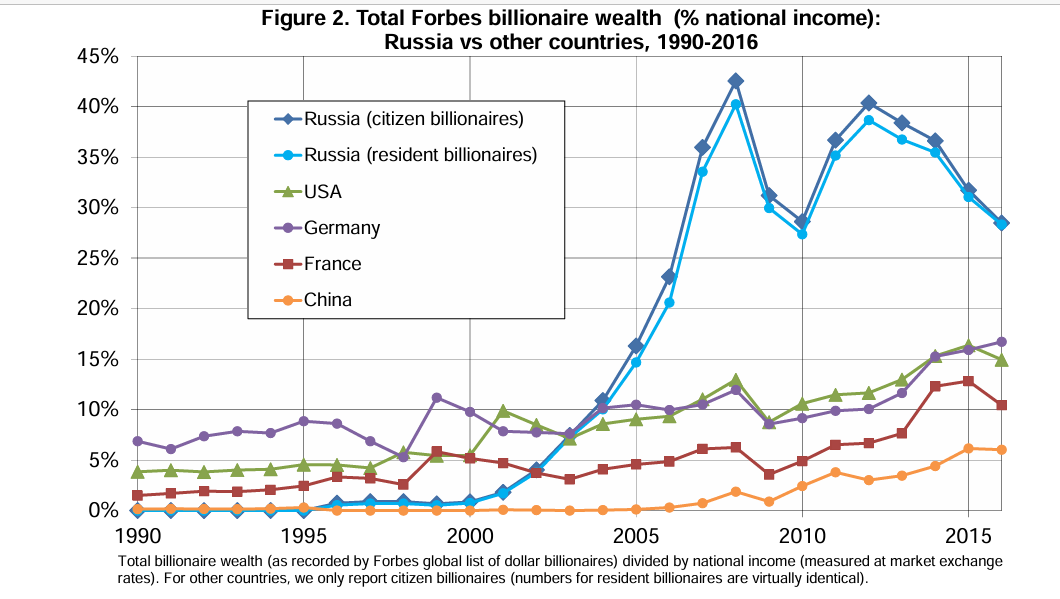
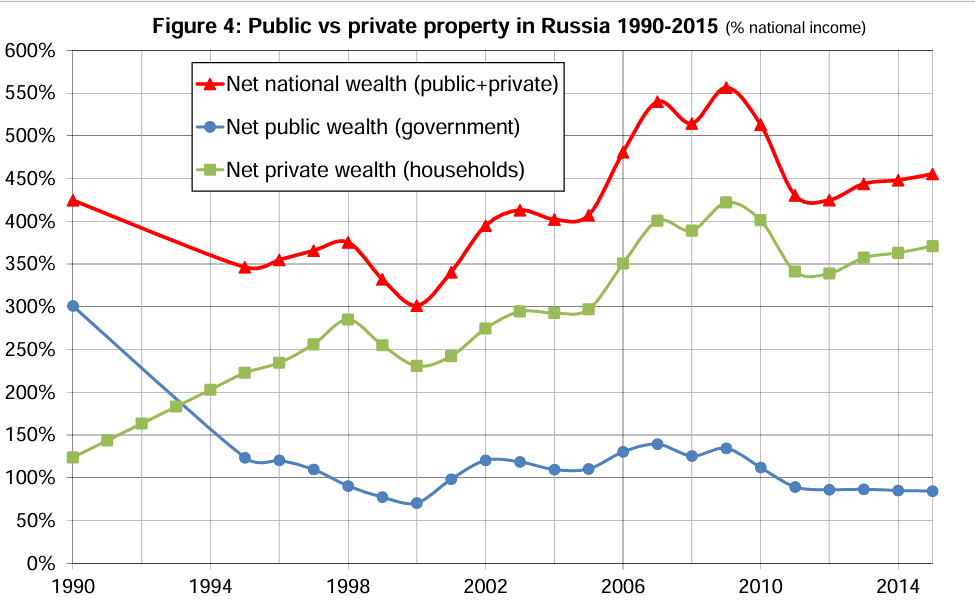
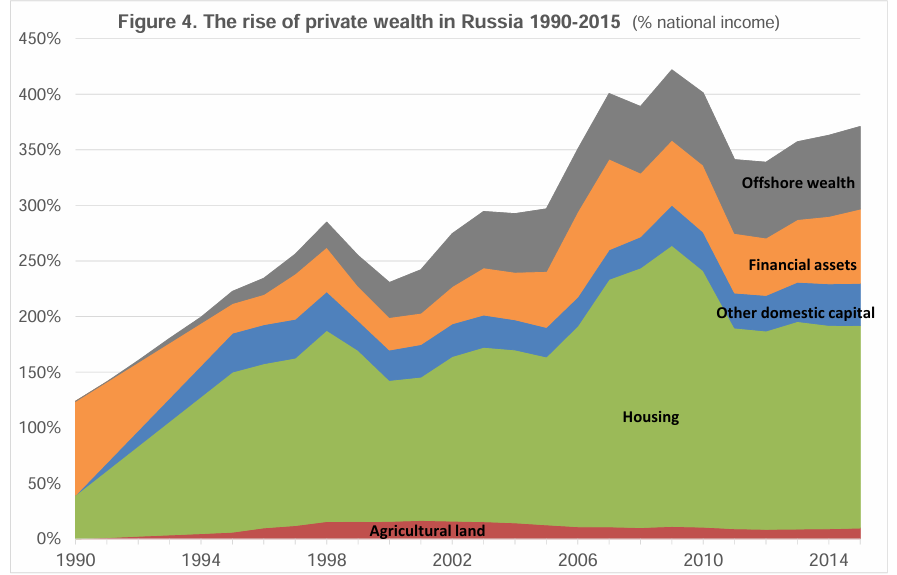
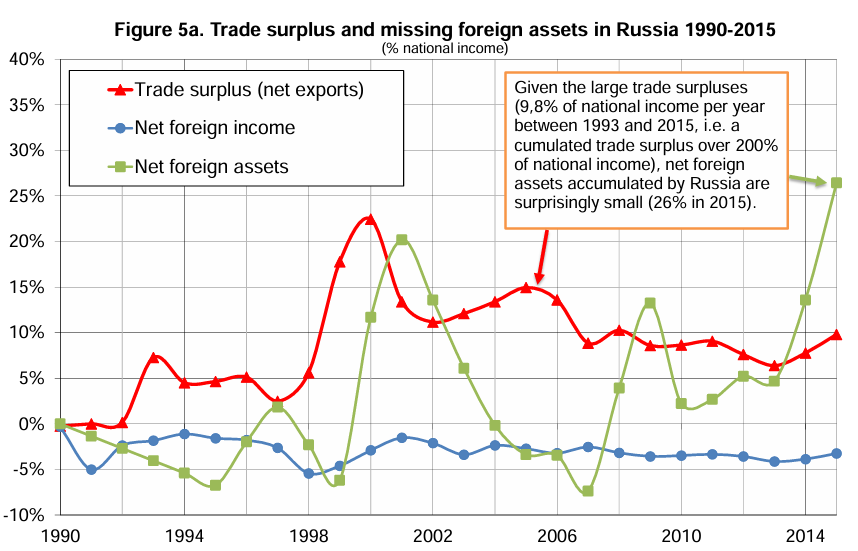
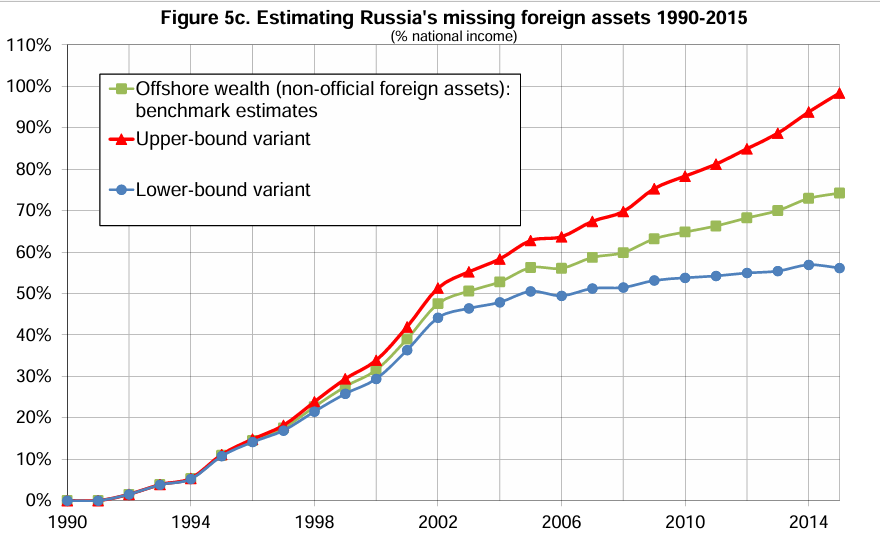
Source: http://piketty.pse.ens.fr/files/NPZ2017WIDworld.pdf “we should make clear that there is little doubt in our view that the welfare of the vast majority of the population has improved since the end of Communism. The interesting question is whether they could have improved even more and in a more balanced and egalitarian manner with different policies and a different inequality trajectory.”





Leave a Reply