
by John Helmer, Moscow
@bears_with
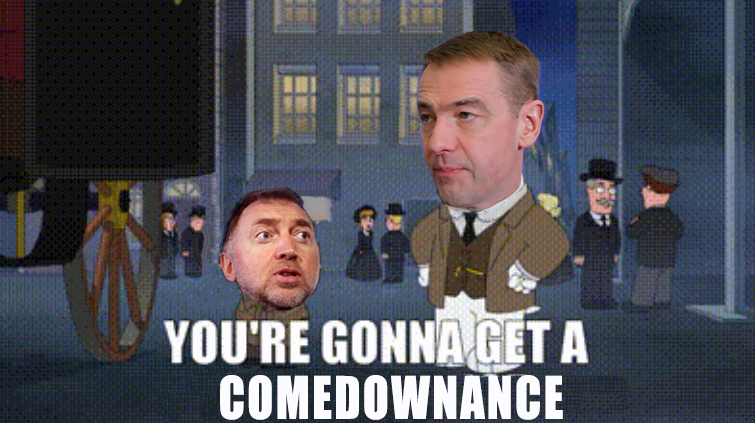
The opposite of comeuppance ought to be comedownance. That’s when, instead of a negative outcome which the perpetrator has deserved, the outcome is positive but not what the perpetrator had planned or anticipated.
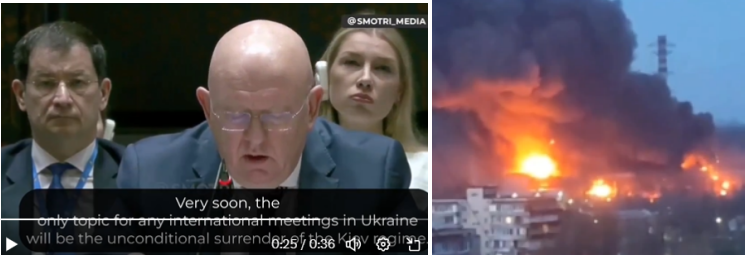
This is now happening to Oleg Deripaska’s (lead image, left) aluminium monopoly Rusal, according to an announcement this week by the Deputy Minister of Industry and Trade, Viktor Yevtukhov (right). “We have high-quality aluminium,” he told reporters at an industry conference. “And I do not think that the refusal of America and England to buy our aluminium, where we did not supply so much anyway — crumbs, so to speak — will somehow affect the possibility of our supplies to other countries.”
Yevtukhov was referring to the new US and UK sanctions, announced on April 12, to stop exports into their markets of Russian primary aluminium, copper and nickel, and put an end to stocking and trading of the Russian metals by the London Metals Exchange (LME) and the Chicago Mercantile Exchange (CME).
On April 24, Andrew Home, the London expert on the international aluminium trade, acknowledged that warehousers, metal traders and speculators, and the Russians have already devised schemes to evade the sanctions, keep the discount for Rusal aluminium sales from growing, and at the same time hold the exchange benchmark price of the metal steady. Home understands the complexities of the LME trade; he admits he doesn’t know what the outcome will be. If he knew more about Russian conditions than he and Reuters are capable of, it would be clear that Deripaska aims to buy time to defeat the sanctions and get the Russian treasury to pay the price.
Yevtukhov’s response is that if Deripaska and Rusal are asking for a bailout by the Russian government, there are conditions: in exchange for the misfortune which the Americans and British are attempting to impose on the Russian metals sector, Deripaska’s application for state budget funds to buy aluminium from Rusal and keep it in a new state stockpile, and in return for letting Deripaska hold up the profit flowing into the company and into his own pocket, he must change his strategy for the benefit of the Russian state.
“[Mr. Yevtukhov] drew attention to the fact that the restrictions imposed by Western countries apply only to primary aluminium. They do not affect products made from Russian aluminium. ‘Experts estimate the potential and capacity of our market to 2 million tonnes, despite the fact that Rusal, as you know, produces 4.1-4.2 million tonnes approximately. Of course, this is not done overnight, but such work is underway, and its results are already evident.”
What Yevtukhov means is that Rusal must now switch from being an upstream aluminium producer from bauxite mine to alumina refinery to aluminium smelter, exporting metal abroad, to becoming a vertically integrated producer of such secondary and processed aluminium products as beverage cans, foil, plates, sheets, and extrusions for construction, automobile and other manufactures.
The new strategy for Rusal puts a priority on the domestic Russian market. This had been Deripaska’s strategy for the decade between 1994 and 2004. But he then abandoned the downstream because it was less profitable than upstream, and impossible to hide from Russian tax as were the upstream and export lines of business.
For Deripaska to be told by a deputy minister that he can’t have a state bailout for his unsold metal unless he accepts a revolution in corporate tax avoidance is a plan no Russian minister or president has achieved before. Or else it’s a false flag Deripaska himself is waving at Washington and London.
(more…)