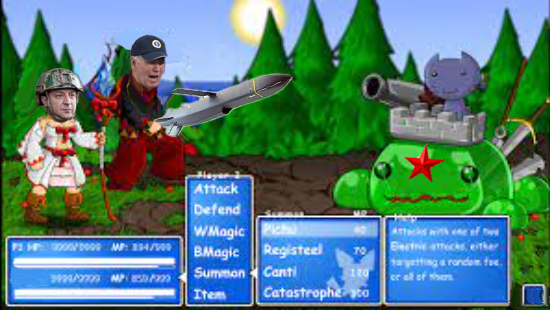
The Dutch prime minister Mark Rutte (right, centre) was the first leader of a NATO state to try to send his soldiers on to the Ukrainian battlefield to fight Russian forces directly. That was in July 2014, in the aftermath of the Ukrainian shoot-down of Malaysia Airlines Flight MH17. That Rutte scheme failed after it was vetoed by the German Chancellor, Angela Merkel; she insisted on more time to prepare the NATO forces in the Ukraine to fight Russia. Now that they are, Rutte is the US candidate to become the new secretary-general of NATO.
For the first time, however, his appointment is being vetoed by a NATO member, Hungary, which has proposed an alternative candidate – the ethnic German Klaus Iohannis, who is President of Romania. Because NATO rules require unanimity on the secretary-general, the Hungarian objection puts the Rutte nomination in the soup — make that goulash.
In war, exaggeration is a killer. In the media, exaggeration is a bestseller. In the current war there is a dearth of military and political analysts who for truth or money will tell the difference.
Instead, when the mentality of the war fighters is a combination of racial superiority and spetsnaz derring-do, what you get is the conviction that with one more brilliant operation and one more super-weapon, victory can be snatched from every indicator of defeat because the adversary will be persuaded to accept negotiations as he loses his nerve.
This is the meaning of the Anglo-American publicity which burst over the long Bank Holiday and Memorial Day weekend, as summer campaigning began in earnest for the July and November elections in the UK and US — with the incumbent in the former running 21 points behind, and the incumbent in the latter trailing on an approval margin of minus-16 points.
The Reuters propaganda agency, based in New York, is claiming to have found four Russians from “a senior level in the political and business worlds” to be talkative about what they say they know of the Kremlin’s end-of-war plans. “[President Vladimir] Putin can fight for as long as it takes, but Putin is also ready for a ceasefire – to freeze the war… Putin would, however, be ready to settle for what land he has now and freeze the conflict at the current front lines, four of the sources said. ‘Putin will say that we won, that NATO attacked us and we kept our sovereignty, that we have a land corridor to Crimea, which is true,’ one of them said, giving their own analysis.”
With just one more successful push from the Ukrainian side, Reuters and its four Russians believe, Putin will agree to give up his war. This push, which the western media have been amplifying this week, is the drone attacks on Russian radar stations for early warning of nuclear missile attack at Armavir, Krasnodar, and Orsk, Orenburg.
Although Russian military sources claim these attacks were pinpricks, and the second of them was shot out of the sky before detonation, western media are reporting that it is now the battle strategy of the US, the British, and the Ukrainians to provoke Putin into retaliation, crossing the red line of tactical nuclear warfare. That’s a red line, the allies are calculating, which Putin would rather negotiate end-of-war terms than cross.
A retired Moscow military analyst warns against the exaggeration, not of the attacks themselves, but of Putin’s power to decide end-of-war terms over the opposition of the General Staff and the new Defense Ministry. “It is obvious the Ukrainians have had a string of successful breakthroughs,” the source acknowledges, “– against ships, airfields, refineries, and now this radar site. We also understand it is not the Ukrainians: all target selection, identification, guidance, and the hardware are American or European. Where the command control of these launch sites is, we do not know but it might well not be in Ukraine.”
“But the Russian response will not be nuclear. That is impossible. There are a thousand options between doing nothing and going nuclear, and we can be sure the General Staff are working on all of them. So when people say this is provocation for a nuclear strike and that [Ukrainian President Vladimir] Zelensky is provoking it, we understand that, first, NATO planners know Putin will not go nuclear because he and his generals are too rational and sane. And second, Zelensky is not the one making the provocations. So the real red line now is not the nuclear arms provocations from the NATO side. That’s a fantasy of theirs. Just so, in response, I think it’s time Putin stops making threats and strikes at the source of these operations.”
When desperate weakness triggers battlefield fantasies, call this the Popski Syndrome.
The release of fresh details of the fatal helicopter flight on May 19 which killed Iran’s President, Ebrahim Raisi, and Foreign Minister Hossein Amir-Abdollahian is ruling out bad weather, machine failure, signals interference, on-board bomb or ground-fired missile as the cause of the crash. Iranian civilian, military and clerical officials are also excluding Israeli or US involvement.
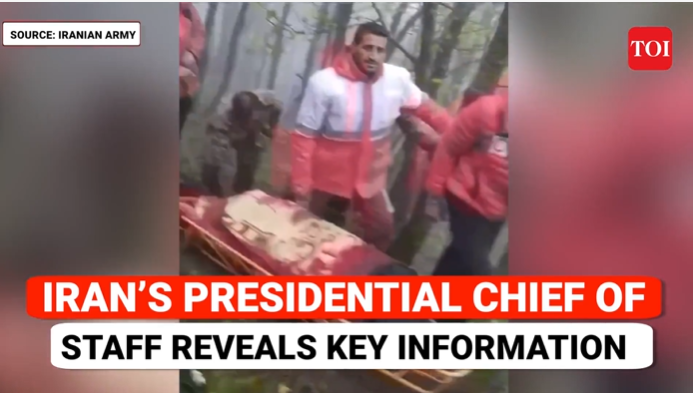
Instead, Raisi’s chief of staff, Gholam-Hossein Esmaeili, a civilian lawyer and Raisi loyalist for many years, has described a sequence of details, preceding and following the incident, which hint at suicide murder by one of the pilots of the presidential aircraft.
Esmaeili made his remarks on Tehran television on the evening of May 21. He revealed that Raisi’s helicopter was flying second in a convoy of three aircraft, while Esmaeili was flying third, behind Raisi, when his helicopter “suddenly disappeared”. The pilot of the third helicopter then “decided to circle and return to search for the President’s helicopter”.
Esmaeili also said that attempted calls to Raisi, Amir-Abdollahian, and the pilot of their aircraft, Colonel Seyed Taher Mostafavi, all failed to produce a response. However, two calls were answered by Ayatollah Mohammad Ali Al-Hashem, the only passenger who appeared to survive the impact and fire of the crash, but died soon after. Al-Hashem represents the clerical power in East Azerbaijan province. According to Esmaeili, Al-Hashem said “our situation is not good, the copter has crashed into the valley”.
Al-Hashem’s remark appears to rule out a missile strike or bomb explosion.
Esmaeili’s statements rule out adverse weather conditions and the sight or sound of mid-air explosion.
An Iranian Army General Staff statement, issued last Friday May 24, after investigation of radar, radio, other telecommunications, and the aircraft debris, has confirmed normal navigation and communications between the helicopter pilots and with ground controllers. “Gunshot wounds or similar ones have not been seen in the remaining parts of the helicopter,” the report claims, “in the conversations of the control tower with the flight crew, no suspicious cases have been observed.”
The implication is also that there were no sudden machine failures triggering loss of pilot control and indicated by either pilot or automatic instrument distress signals.
Because the Raisi aircraft disappeared into clouds ahead of Esmaeili, and there was no heat burst from missile or bomb strike, satellite images by Russian, US, or Chinese satellites are unlikely to have recorded what happened. The signals intelligence collected by Russia and the US is also unlikely to have recorded more than Esmaeili has admitted.
That leaves the Russian hint published by Konstantin Malofeyev, owner and editor-in-chief of Tsargrad, citing a retired Russian Air Force general. According to Major General Vladimir Popov (retired), “the main threat to top officials during air travel comes from themselves”.
The mainstream Russian press, the Moscow military bloggers, and RT, the state propaganda organ, have all avoided analysis of the incident forensics and speculation of motive; they have stuck to repeating official Iranian news releases. RT’s version of Esmaeili’s statements is significantly shorter and less comprehending than the Islamic Republic News Agency (IRNA) report and the Times of India video.
“Esmaeili’s statement points to Raisi’s pilot making the decision to crash,” comments a western military source. “Why order the other two aircraft to ascend and get above the clouds, and then not do so himself?”
A new press release in Ottawa reports that the court martial announced for Canadian Armed Forces (CAF) Colonel Robert Kearney for his disagreement with Canadian, American, and British military planners of Ukrainian battlefield operations against Russia may not proceed.
The Canadian government news slip reveals the allegations of disloyalty against Kearney announced publicly last month are now likely to be abandoned.
On April 29 a CAF press release was issued in Ottawa claiming that as a senior planning officer based in the UK and in Romania for Ukraine war operations, Kearney had made “derogatory and disloyal comments about Senior CAF [Canadian] and NATO [US, UK] members. The first offence allegedly occurred in December of 2021 and four subsequent offences ranged from January 2023 to November 2023. The offences are alleged to have taken place in the United Kingdom and in Romania.”
Kearney was at the time of his “disloyal comments” the assistant chief of staff at the Allied Rapid Reaction Corps (ARRC) in Innsworth, United Kingdom. In this role, Kearney supervised more than 400 staff officers from the armies of the UK, US, Canada, Italy, Denmark, and other NATO states.
ARRC and NATO press releases claim Kearney’s unit has been operating against Russia in Estonia and in Romania “in its primary role as a war fighting Corps Headquarters.”
Under Section 129 of Canada’s Defence Act – the provision of military law reportedly being applied against Kearney — prosecution of soldiers is allowed for an undefined “act, conduct, disorder, or neglect to the prejudice of discipline”. The penalty for conviction is “dismissal with disgrace”, which includes loss of pension. This law has not been tested — no officer of Kearney’s rank has been charged and prosecuted for a Section 129 offence in a court martial before.
Canadian military sources believe Kearney is being threatened with court martial now because the Canadian government’s policy to finance, arm, train, plan, and direct Ukrainian operations against Russia is being defeated; and that the military collapse east of Kiev now risks loss of more territory and the lives of Canadians currently working in the Ukraine and at cross-border bases in Poland and Romania.
At least one thousand Canadians have been counted by the Russian Defense Ministry on the battlefield since the start of the Special Military Operation; by March of this year, 422 had been confirmed killed in action.
Loss of confidence in the Ukraine war has become increasingly public in the military staffs of the US, France and Germany, but this is being kept secret in the UK and Canada.
On May 15, a new Canadian government press release was issued acknowledging that, in fact, no charges have been filed against Kearney, and that the “military [have] yet to decide on court martial for the colonel accused of making derogatory comments about Canadian Forces leaders”.
The new press release, issued ten days ago in an email to an Ottawa journalist, reversed the meaning of the earlier government announcement. The new message divulges that Kearney has been accused by officers he had criticized for their professional incompetence, but he has not been charged with a military offence. “National Defence spokeswoman Andrée-Anne Poulin noted the charges against Kearney have now been referred to the Director of Military Prosecutions. ‘The prosecutor assigned to review the case will first complete the post-charge analysis,’ she explained in an email. If the prosecutor prefers charges, and once the counsel for the accused indicates they are ready to proceed, the case will be brought before the Chief Military Judge, at a scheduling conference.’ Once the dates for the trial have been identified, the court martial administrator will issue a convening order, and a summons to the accused, which will specify the date for the court martial, Poulin added.”
Canadian lawyers point out that the conditional “if” and “once” in this defence ministry statement are a new sign that the political costs of prosecuting Kearney have become too high to proceed against him.
A reporter named David Pugliese, who works for the Ottawa Citizen, has been the single source of the publicity against Kearney. According to his newspaper, Pugliese is “an award-winning journalist covering Canadian Forces and military issues in Canada.”
A veteran with service in Afghanistan believes there has been an official cover-up of what Kearney has told his superiors during the Ukraine operations planning process, including warnings from Kearney of the future risk of Canadian casualties and military equipment losses. The source notes that no Canadian reporter has followed up on Pugliese’s publications. “I’ve seen nothing [else] on the Kearney case. Pugliese has allowed himself to be used as a tool, not only against Kearney, but against anyone else in the CAF considering speaking out against stupid and dangerous war plans and operations.”
Another Canadian military source says the Kearney case shows how weak Canadian generals and politicians have become now, compared to their counterparts during World War II when Canadian General Harry Crerar successfully opposed British General Bernard Montgomery to claim Canadian control over Canadian military forces and resist sacrificing Canadian troops in operations Montgomery was planning against the Germans in 1944 which Crerar told Montgomery were foolhardy.*
Kearney’s supporters in the Canadian military are hoping that if the case against him collapses, he will sue Pugliese and the Ottawa Citizen for collaboration in defaming Kearney.
This year 2024 marks the fiftieth anniversary of the publication of my first two books in New York in 1974. To contemplate what to scribble next, I’m taking a few days of May break.
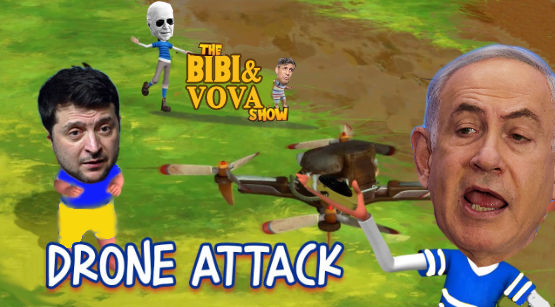
Since last November the regime of Vladimir Zelensky (lead image, left) in Kiev has been advertising the products of a company called Piranha-Tech for newly developed electronic warfare (EW) technologies which the Israeli government of Benjamin Netanyahu (right) is now supplying the Ukraine for operations against Russia.
According to a Russian military blogger report published on May 4, Israeli companies specializing in electronic jamming and drone technologies are behind a Ukrainian government, US, and UK-funded drone production line and deployment of the weapons on the Ukrainian battlefield. Piranha-Tech, according to this source, is 49% owned by Israeli shareholders, who developed the technology, and 51% owned by Ukrainians who are managing the battlefield supplies. Piranha-Tech anti-drone guns and jammers are based on Israeli military technologies, the report claims.
A senior Canadian Armed Forces (CAF) officer, who is the Assistant Chief of Staff at the NATO Allied Rapid Reaction Corps (ARRC), faces court martial, “dismissal with disgrace”, and loss of his military pension for having disagreed with Canadian, American, and British military planners of Ukrainian battlefield operations against Russia. His disagreement was in private, when the officers were asking for his professional assessment, and didn’t like what he told them.
Colonel Robert Kearney was charged by the Canadian military police on April 23. The charge sheet says he faces “five (5) x counts of Conduct Prejudice to the Good Order and Discipline pursuant to section 129 of the National Defence Act.”
Public disclosure was delayed by the Department of National Defence in Ottawa until Monday, April 29, when a press release claimed Kearney had been under investigation since another officer filed a complaint against Kearney last November. According to the ministry statement, the military police had “received a complaint of a senior CAF officer allegedly making derogatory and disloyal comments about Senior CAF and NATO members.”
Section 129 of the law refers to “any act, conduct, disorder or neglect”, but it doesn’t define what “good order or discipline” means in the Kiev and Lvov bunkers where Canadians tell the Ukrainians what to do. Canadian sources believe the law has rarely been used against an officer of colonel’s rank, and never in a court martial of an officer for warning that military plans risked loss of Canadian lives and resources.
Canadian military sources believe Kearney is being court-martialed now because the Canadian government’s policy to finance, arm, train, plan, and direct Ukrainian operations against Russia is being defeated, and that the military collapse east of Kiev now risks loss of more territory and the lives of Canadians currently working in the Ukraine and at cross-border bases in Poland and Romania. At least one thousand Canadians have been counted by the Russian Defense Ministry on the battlefield since the start of the Special Military Operation; by March of this year, 422 had been confirmed killed in action.
“The timing of the alleged offences,” says a Canadian veteran who served with US and NATO units in Afghanistan, “was when the Germans took over command of NATO’s rapid reaction force which has been building up men and materiel, including heavy tanks and F-16s, in Romania for a plan to attack Russian forces around Odessa. Kearney’s court martial is a warning to his fellow officers not to object or predict destruction of the NATO forces engaged.”
“Kearney said things that clearly offended the top decision-makers in Ottawa,” the source says. “Criticizing the mission meant criticizing [Deputy Prime Minister Chrystia] Freeland [lead image, left] and the UCC [Ukrainian Canadian Congress]. Criticizing how the mission was being conducted also meant criticizing the Americans and British. That’s what has drawn the charge of disloyalty.”
Following yesterday’s publication on the work of Lawrence Freedman (lead image, left*), he was sent a request that “in the event you detect error of fact or interpretation in this piece, please inform me at once so that the appropriate remedy may be taken”.
A reply signed by Freedman has been received. The email address is Freedman’s institutional one which has been made public by King’s College, London; the IP address locates the origin of the email in Dublin, Ireland, through Microsoft.
Freedman replies:
“Seriously. What do you expect from me? This is all nonsense. I haven’t got the time or energy to go through it all.
“But I do need to make it clear that I made no money by chairing KCL enterprises (because that was part of my job as a member of KCL’s senior management team), or from RAND Europe. I did not have shares in either (nor could have had). The idea that I used these bodies to monetize my expertise is just wrong as well as defamatory. Nor have I ever got anything from ‘All American entertainment’, of which I was unaware until today although it does have a very old photo of me. You should also note that you fail to distinguish between free subscribers to Comment is Freed – by far the majority – and those that pay. It would be great to have 40,000 paying subscribers – but we don’t.
“You appear to be deeply antisemitic – from your opening and that you find my son’s work with the Holocaust Education Trust to be sinister.
“As for the rest I’m happy to defend the integrity of my analyses, past and current, but not with you.
“Instead of trying to show that I’m a terrible human being why not just acknowledge that you support a corrupt and criminal regime engaged in a catastrophic aggressive war against its neighbour and I don’t.”
The kings of Europe used to pay clever men to pretend to be fools in order to make jokes to amuse the monarch and his court. They were called jesters. A man who pretends to be cleverer than he is, and who tells jokes in order to fool others into making himself rich – they are hucksters.
In the Jewish garment trade their merchandise is known as schmattes. This means “rags”; it was a Polish word before it was picked up in Yiddish — something cheap to make to be sold dear. By extension, peddling anything cheap and fast on false pretences is schmatte business. The Gentile word for this is a hustle.
For the merchandise Sir Lawrence Freedman of London has been selling, he has been well paid personally, and the corporation he used to run when he was a professor of “war studies” at King’s College is now a multimillion-pound business. To collect money for himself, and also for his son, Freedman has used company identities whose financial reports can be read at the UK Companies House registry. The operation optimizes on its tax liabilities to the UK Inland Revenue by following the advice of Judith Freedman, a professor of taxation at Oxford; she is Freedman’s wife.
The turnover, costs, tax, and profit lines of the Freedman businesses give a glimpse into how it possible for him to appear regularly in books, newspapers, and corporate conventions in order to announce, as he advertised last week in a London newspaper, that the new US military supplies for the Ukraine will give the allies time to “restore [Kiev’s] battlefield fortunes”; solve the Ukrainian “manpower problems…as new recruits don’t face the prospects of being sent to fight with insufficient ammunition”; “time before they will have the strength to start liberating substantial amounts of territory”; and time to compel President Vladimir Putin to “contemplate the possibility that [the war] might yet again swing towards Ukraine”.
The subjunctive “might” on the punchline is Freedman’s slip – he reveals he isn’t sure of the value of what he is selling.
Freedman was the British government’s official historian of the Falklands War and then a member of the Chilcot committee of inquiry on the British war against Iraq. He has also been a career-long Russia threat faker and fighter of the war his side keeps losing, as he keeps insisting on the reverse.
This isn’t jestering, it’s huckstering. Freedman is for hire through an organ called All American Entertainment (AAE), which describes itself as “a full-service talent booking agency, specifically focused on the needs of event professionals looking to book keynote speakers and corporate entertainment for their events.” His pro-US credentials for fighting the war against Russia, and his pro-Israel credentials for fighting the war against the Arabs and Iran have earned him an engagement at a Zionist-financed think-tank in Australia which calls Freedman “the foremost authority on modern war in the English-speaking world.” Small world, if viewed from Sydney, Tel Aviv, or London.
Starting with a PhD entitled “The definition of the Soviet threat in strategic arms decisions of the United States: 1961–1974” – that’s the US targeting version of Russia — Freedman has monetized his war-fighting line through incorporation of a company called King’s College Business Limited, UK company number 02714181. Founded in 1992 with the name KCL Enterprises Ltd, it said it was an investment and commercial trading company without an express purpose, apart from making money. Freedman became a director in 1998 when he gave a home address in Wimbledon. On Freedman’s street, local realtors value the average house price at the moment to be £1.9 million; this is down 15% from its peak in 2017.
War with Russia has been much more profitable for Freedman. Losing the war, that’s to say.
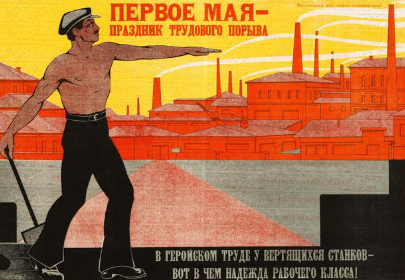
Every spring, when it’s certain no more snow will fall on Moscow, it helps to remember what the celebration stands for, and look forward with hope. Hope doesn’t come cheaply.
In English and many other languages including Latin, May Day meant the return of fecundity, flowers, food harvests, and so hopefulness after winter, with entertainment from the randiest, cleverest, and silliest of the field creatures, the hare and the goat. Mayday! Mayday! That started in 1927 as an internationally recognized distress call put out on radio, which had nothing to do with the month of May. It started in French – m’aidez! “Help me!” That replaced the Morse code for SOS (“Save our Ship”) which was first adopted internationally in 1905. Mayday!, the radio call for help, was needed when radio replaced the telegraph and a speaking voice was required instead of taps and pips.
These days it’s the traditional left wing, based on workers’ movements, which need help. In France they have been superseded by spontaneous mobilizations, like the gilets jaunes, but they are failing against the Macron presidency; Keir Starmer’s British Labour Party is already a failure of the left before it defeats the Tories. There are leftwing movements in Germany and the US, but it is unlikely that such splinters can achieve more than splinters can – that’s pinpricks. Altogether, this left contributes next to nothing to the defeat of their governments, arms, and armies on the Ukrainian and Middle Eastern battlefields compared to the Russian Army and the Axis of Resistance.
In Russia, the party of Marx and Engels has one leader embalmed and horizontal in Red Square; and a stone’s throw away in the State Duma, the current leader, Gennady Zyuganov, embalmed and vertical. The vote for the Communist Party candidate for president, Nikolai Kharitonin, in the March election was just 4.37% — the lowest level ever reached. For this year’s May Day, the Communist Party has published no analysis of the current situation in Russia or party programme. Instead, it has called for a rally at the Karl Marx statue in front of the Bolshoi Theatre. In addition, the party has announced two dozen slogans for May Day. These include: “Long live the red May Day!”, “Proletarians of all countries, unite!”, “A job! Salary! Confidence in the future!”, “No increase in prices and tariffs!”, “Affordable housing for a young family!”, and “Scholarships at the minimum wage level!”