The media audience has been moving fast in the opposite direction from the reporters and media proprietors. The majority of US audiences, for example, believes all sides of a story deserve to be reported in a balanced fashion. The journalists strongly disagree, however. The younger these reporters are, the more they claim to be leftwing, and the more concentrated their employment in the online media, the more committed they are to the propaganda mission of their employers, and of their governments.
This is Ass Backwards, as Mike Ryan for TNT Radio spells out in this discussion of the performance of the Australian press. There isn’t a major issue in election politics, the recent history of pandemic emergency powers, the display of Nazi symbols, and the wars against Russia and China, which Australian journalists haven’t ignored, covered up, or misreported the story in a way which would have been impossible fifty years ago. History too is Ass Backwards.
More than half of all Australian readers don’t trust what they read in the news media. That is roughly the same level of distrust of journalism as in Canada, Hong Kong and Poland. But no one distrusts journalism as much as Americans whose scepticism of the published word leads the world.
Since readers are smarter than journalists, less gullible, less trusting, what can readers do to learn the truth and stop the lies. Start with this discussion, and then consider how to vote – and if to vote – and how to keep this a secret from pollsters and journalists until Election Day.
The German generals are trying it again. That’s the Wolf’s Lair plot of July 20, 1944.
To save themselves, they are begging their counterparts in Washington, DC, to find a way to lose the war in the Ukraine as quickly as possible without losing the US empire in Germany. This means overruling or replacing, not only Vladimir Zelensky’s regime in Kiev but also the Green Party ministers in power in Berlin, Robert Habeck and Annalena Baerbock, and maybe Chancellor Olaf Scholz to boot.
The Wehrmacht plotter this time is a retired brigadier general named Erich Vad (lead image, right). As German military officers go, he’s unusual. He was trained by a German-born Israeli infantry general turned academic. Vad then reached general’s rank, according to a senior German politician, but “never led a battalion, never led a brigade, and was never deployed in active operations”; he is a “desk general”.
Vad’s self-advertisements mention no active service or combat command. Instead, he has filled advisor posts at the Bundestag (2000-2006) and the Chancellery (2006-2013) when Angela Merkel was chancellor. Since 2014 he has been selling his advice either through Vad’s own consulting firm in Munich or a Swiss intermediary company in Zurich.
Merkel appointed Vad for the German military and the armaments industry to have a voice inside her office. Because they didn’t regard Vad as one of their own, Merkel promoted him to general’s rank.
The bomb Vad has just placed under Zelensky’s table and under the Green ministers’ desks in Berlin can be spotted in an interview he published last week in Cologne.
Australians aren’t the only democrats and allies of the US in the war of the worlds – that’s the one against Russia and China.
Australian voters aren’t the only ones revealing they want to vote against the political choices they are offered at election time.
But Australian voters are the only ones in the world defying the law which makes voting compulsory in their federal and state elections – elections for government officials (lead images, left Dominic Perrottet, right Gladys Berejiklian, premiers of New South Wales) who were the only ones in the world to operate a scheme of keeping their citizens out of the country during two years of Covid-19 emergency powers – a scheme of forcing those allowed to enter to pay for their detention which the officials acknowledged between themselves to be illegal. So they kept it secret from parliament, the press, and the courts.
This use of force, fraud and propaganda is a case study of what is happening throughout the world of the democratic allies, the world the allied governments call the “rules-based international order”. When force, fraud and propaganda make the rules like this, the order which results is fascism.
A leading Ukrainian government official has admitted that a demilitarized zone (lead image, left) to divide the battlefield, protect the Russian east of the country from the US and NATO long-range assault, and partition Ukraine is in negotiation.
“’We are currently being offered the Korean scenario,” Alexei Danilov (lead image, right) announced on January 8. Danilov, a native of Lugansk, is the deputy chairman of the National Security and Defence Council, and second in rank to President Vladimir Zelensky. “[This is] the so-called conditional ’38th parallel’”, he told local reporters. “Here are Ukrainians, but there Ukrainians are not like that. The Russians will now invent anything. I know for sure that one of the options they can offer us is the ’38th parallel’”. Danilov claimed one of the sources for the proposal is Dmitry Kozak. Officially, he is a deputy head of the presidential staff. In 2020-21 he was the Kremlin’s chief negotiator on the Minsk accords with the Kiev regime and in the Normandy format with Germany and France; for Kozak’s detailed record of those negotiations, read this.
Danilov now says Kozak “meets with former politicians in Europe and conveys through them the message that the Russians are ready to make concessions in order to fix the current status quo and force Ukraine to a truce.” Danilov did not say that he, Zelensky and the Ukrainian-US general staff have rejected the idea. Instead, he claimed the Korean DMZ has proven to be a mistake: “Danilov said that during a recent meeting, Korean representatives noted that establishing the division of the Korean peninsula into two parts along the 38th parallel was a mistake as the concessions made in the 1950s after the end of the war between North Korea and South Korea are currently leading to problems.” It is unclear what meeting Danilov was referring to, if any. US press reporting has identified the mistake of Vice President Kamala Harris last September in misnaming the “Republic of North Korea”.
Moscow sources suspect Danilov is attempting to relieve the pressure now growing on the Ukrainian generals from the US and the NATO command to consider an armistice before the Russians launch their anticipated general winter offensive. By exposing and trying to sandbag the Americans, Danilov’s remark is a signal that the real US assessment is that a much bigger loss of military capacity, territory and viable economy will be the outcome of the Russian offensive – unless the Ukrainians buy time with a ceasefire and protracted armistice talks to commence.
The reaction of the Stavka to that has been President Vladmir Putin’s explicit condemnation of the buying-time tactic after former German chancellor Angela Merkel revealed it last month, and ex-French President Francois Hollande repeated it on December 28. “The West lied to us about peace,” Putin said in his New Year address on December 31, “while preparing for aggression, and today, they no longer hesitate to openly admit it and to cynically use Ukraine and its people as a means to weaken and divide Russia. We have never allowed anyone to do this and we will not allow it now.”
Putin also confirmed the message with a Korean gloss. “Russian servicemen, militiamen and volunteers are now fighting for their homeland, for truth and justice, for reliable guarantees of peace and Russia’s security.” The narrow 4-kilometre depth and short 240-km length of the Korean DMZ are not, Putin implied, “reliable guarantees of security.”
Angela Merkel (lead image), the chancellor who destroyed the Christian Democratic party in German politics always hated Russia and President Vladimir Putin most of all.
She concealed this for as long as she calculated she needed to preserve the votes of East Germany, German businesses and unions for her re-election. But lie after lie she leaked through her staff to the German and English press.
She even tried to promote a German candidate to rule the Ukraine in her war against Russia – until Washington installed their own in Kiev, and told Merkel to fall in line. She did.
The outcome of Merkel’s rule between 2005 and 2021 is her 4-election failure to win a majority of votes or seats in the Bundestag; the defeat of every German voting bloc which had supported her in power in Berlin; the rebuilding of the Berlin Wall in the minds of the remaining Germans who disagree and who resist; and the return of Russia-hating and Adolf Hitler’s war aims for Germany against Moscow. They are also the war aims of Joseph Kennedy, father financier of the US Democratic Party whose fascist line was tolerated by the White House until the fighting war started in earnest in Europe and Kennedy was gotten rid of.
No comparable resistance to the alliance between German and American fascism exists today in the US, Europe, Berlin or London. The resistance, however, is worldwide; does not speak English as a native language; and the Russian armed forces are stronger than they ever were. The problem for them is how wide and deep the demilitarized zone must be drawn to defend Russia for the foreseeable future – how far west of the Dnieper River? To the Oder and Neisse Rivers of Poland and Germany, or to the Berlin Wall?
With every new bombing, missile, and drone raid, the Stavka meeting daily in Moscow conducts its experiment in drawing the lines westward to the last Ukrainian, then to the last German.
In the Russian Foreign Ministry’s final briefing for the year, spokesman Maria Zakharova had not yet registered what Merkel said in Italian, in her interview with Corriere della Sera on December 27. That was: “ We all knew that it was a frozen conflict, that the problem was not solved, but this gave Ukraine precious time…the Cold War never really ended because Russia was never pacified.”
For Merkel’s “problem to be solved” and “pacify Russia” read the US and NATO war to destroy Russia. “Today we act like this under the pressure of war,” she added, “which I approve of.”
According to Zakharova, referring to Merkel’s earlier interviews in German with Die Zeit and Der Spiegel, “Angela Merkel’s confessions that the Minsk agreements only served to buy “time for Ukraine” leads to an interesting situation. The Western countries prevented their media from visiting Donbass. At the same time, they needed time, as they say, for the Kiev regime to grow stronger. This is real evidence of what Russian leadership has been talking about. All this indicates that the Ukrainian army and the West are using unacceptable methods not only on the battlefield, but also in the information war that they have unleashed against Russia. The Kiev regime and its Western handlers are trying to hide their own crimes and the truth about what is really happening in Ukraine.”
From the American-Ukrainian gun platform aimed at Russia to the American-Australian gun platform aimed at China, this is der krieg der welten — the war of the worlds. Listen to the discussion led by George Eliason from Donbass.
If you pay government taxes, you have done your bit and contributed to the one hundred billion dollars which the US and its allies have spent on the Ukrainian battlefield since the year began. And if you are German, you are going to be paying one hundred billion Euros in next year’s Berlin rearmament programme aimed at fighting Russia and China.
Next, if you think that in these outlays you are making a winning investment in securing the defence of your frontiers, of your democratic freedoms and your constitutional and human rights, you are suffering the first-wave blast effect of the neutering bomb.
We are in Europe’s second Hundred Years War, and at the end of the first year of Europe’s second Thirty Years War. What we have to look forward to next year is an armistice on the Ukrainian battlefield, but not an end to the war.
This is because President Biden (lead image, front 1st right) aims to fight it until Russia’s destruction, as do Olaf Scholz (rear left), Andrzej Duda (rear, centre), Vladimir Zelensky (rear, right), Giorgia Meloni (front, half, right) and Emmanuel Macron (front, full right). Like the European princelings and principates who fought each other to standstill and penury the last time around, none of them has long to look forward to, and certainly no victory-in-Europe parade.
Russia’s offer to them for the future, for mutual security without defeat on the battlefield, was tabled as treaties of non-aggression and security for Europe last Christmas, on December 17, 2021. After the Russian offer was dismissed by Biden and the others a month later, President Vladimir Putin had no choice but to launch the special military operation. This is now a general military operation because Biden and his allies have committed themselves to that. Scholz’s one hundred billion Euro rearmament of Germany to reinvigorate the war against Russia after the armistice on the Ukrainian battlefield leaves Zelensky’s Ukraine with a future shrinking as fast as his territorial capacity to threaten; Scholz’s Germany ditto.
Hitler is in this picture because the ruination of Europe and the US in fighting this war can only be sustained inside their countries by the methods of fascism – force, fraud and propaganda — which Hitler introduced more systematically than had been attempted before; and before he ran into a Russian army which was magnitudes weaker than it is today.
The Montreal Express is the one Canadian export to the United States which Americans are afraid of.
It’s the sub-zero cold wind which can stop cars, twist railroad tracks, cut power lines, cut off fingers and toes with frostbite and kill with hypothermia. On the calendar it starts to blow about now and keeps threatening until March.
Call it Canada’s General Winter fighting a rearguard action in the war for Canadian independence which has already been lost.
Matt Ehret, one of Montreal’s leading geopolitical analysts, casts a cold eye on the warfighting in which Canada and the US are engaged with the NATO allies. This is now the war against Russia in Europe, and also against China in Asia. Listen to this world view blowing out of Montreal, and watch as Michael Werbowski hosts the discussion.
Winter Storm Warning (WSW): with the traditional Montreal Express come deep accumulations of snow. This podcast will help you stop the snow job.
It may already be there on your smartphone, the wall of your smarthouse, or the computer in your lap or on your desk. Depending on where you are located, it’s Ausfash, Canfash, Greenfash (Germany), Ukronazism (Canada, Poland, Ukraine).
A generation ago, this is what the textbooks called the banality of evil – when the textbook writers said they were talking about Germans. This Gorilla Radio discussion by Chris Cook brings you up to date, to the cutting edge, and to the “new Germans” – that’s almost everybody who lives in, or who believes they live in what is being cynically called the “rules-based international order”. Cynical because there’s nothing orderly about the international order we live in now; in fact, we are at war, so the rules are the reverse of what those who publicly advocate them know them in secret to be. The real rules are force, fraud, and propaganda. They are producing lawlessness, not order – and that’s fascism.
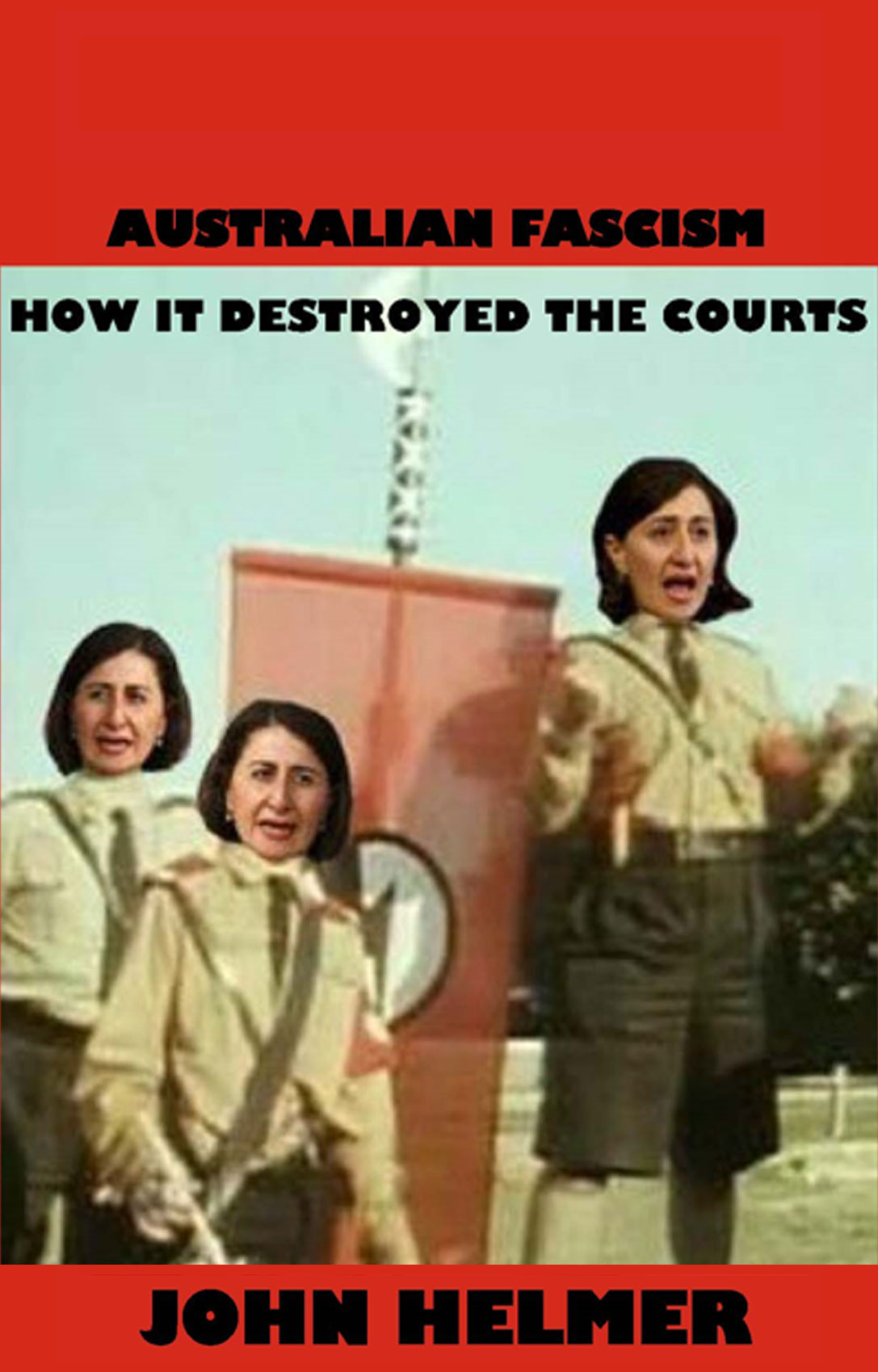
Australia was the only country in the world to close its borders to its own citizens during the COVID-19 pandemic, and then to force the few allowed to return into police detention for which the detainees were compelled to pay.
This dictatorship of coronavirus as a crime was created by Prime Minister Scott Morrison, who seized the national health, border control and finance powers for himself in secret from parliament and from his own government; and by Gladys Berejiklian (lead images), Premier of New South Wales, who ordered the scheme to compel travellers arriving at Sydney Airport to pay several hundred million dollars for a police operation fabricated to look like a quarantine health service.
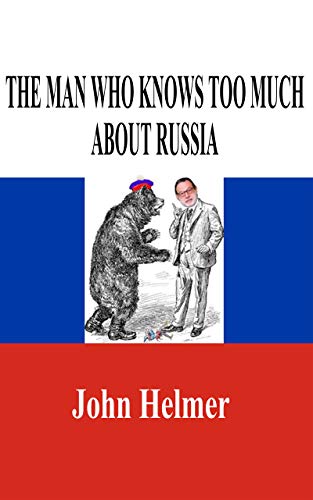
This book tells the story of a lawsuit in a Sydney court – the only one in the country to have challenged the legality of the COVID-19 quarantine fee scheme, and to uncover the lawlessness of the state camouflaged by media propaganda which most Australians have believed to be the truth — until now.
The classified government record — opened here for the first time — reveals the officials plotting, as they confided to each other, “to reduce opportunity for members of the public to dispute the application of the charging regime and proposal to impose fees for detention”. In more than a thousand pages of court files and a dozen hearings over a year, the lawsuit has exposed the attempt to shut the government’s files and close the case in violation of the state statutes and the precedents of Australian courts.
Force, fraud and propaganda – the world glimpsed in surprise what was happening in Australia when the world tennis champion Novak Djokovic was arrested on his arrival in January 2022, and then ordered out of the country after his court case was dismissed. The Djokovic case was not the exception – it was the Australian rule by force.
This book reveals how effective state autocrats were at keeping up to 100,000 Australians out of the country during the pandemic years, and then at locking them up inside the country after they returned. The story documents how the courts have accepted the lawlessness of the politicians and the police. By their acquiescence, too, Australian journalists display themselves as kapos and collabos.
Those notorious words come from the time of German fascism in Europe.
In this story you follow how, little by little, a state of Australian fascism has developed by the use of force, fraud, and propaganda so effective their targets, the inhabitants of Australia, cannot resist because they no longer recognise what it means to live in lawlessness.